
Jumbo Parent Mother Roll Paper is the large-format base material used to manufacture many everyday paper products. It is commonly converted into toilet tissue, kitchen towels, facial tissues, napkins, and industrial wiping rolls. These products may look simple, but their performance begins with the parent roll.
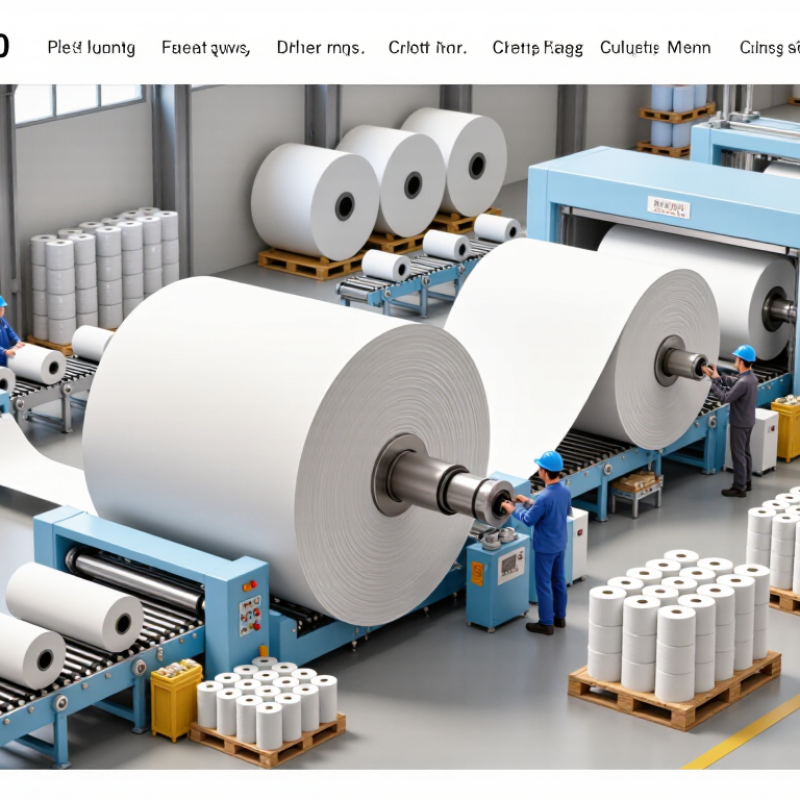
In a converting plant, the roll is unwound, slit, embossed, folded, and rewound into smaller consumer formats. Operators carefully check its width, diameter, basis weight, moisture, softness, and tensile strength. A roll with uneven moisture may create wrinkles, weak edges, or unstable winding. Small differences can affect an entire production batch.
The paper may be produced from virgin pulp, recycled fibers, or a controlled blend. Each option changes softness, absorbency, brightness, and environmental performance. Buyers should review technical data instead of relying only on appearance. A bright sheet is not always the strongest sheet. Softer paper may also require more careful handling.
From practical converting experience, consistent winding is one of the most important features. A poorly wound roll can cause machine stops and unnecessary waste. That assumption can fail.
Jumbo Parent Mother Roll Paper also supports efficient storage and high-volume production. Large rolls reduce frequent material changes and help converters maintain steady output. However, the correct grade depends on the final product, equipment, and market requirements.
This guide explains the main applications, material choices, quality indicators, and purchasing considerations. It also recognizes an important limitation: no single parent roll suits every factory. Careful testing remains necessary.
What Is Jumbo Parent Mother Roll Paper Used For?
Definition and Standard Specifications of Jumbo Parent Mother Rolls
A jumbo parent mother roll is a large, continuous paper roll made for converting into finished products. Converters unwind it and cut, fold, emboss, or rewind it into smaller rolls and sheets. Common applications include toilet tissue, paper towels, facial tissue, napkins, and industrial wiping paper.
Standard specifications usually include basis weight, roll width, diameter, core size, moisture, caliper, and tensile strength. Basis weight is measured in grams per square metre, often written as GSM. Width must match the converting machine. Diameter affects production time and roll handling. Core dimensions must fit the machine shaft accurately.
Winding quality matters greatly. A firm, even roll reduces telescoping, wrinkles, and web breaks. Moisture also needs control because excessive moisture can weaken paper and cause poor converting performance. Recycled, virgin, and blended fibres may require different strength settings. Paper softness is important too, especially for facial and bathroom tissues.
Specifications are not completely universal. They can vary by product design, machine type, and regional purchasing standards. A quoted GSM alone does not prove consistent quality. Test samples should be checked for moisture, caliper, tensile strength, and unwinding behavior. A clean spreadsheet is not enough. In real production, small variations can become visible defects. Even experienced buyers should review certificates and inspect each shipment carefully.
| Data Dimension | Typical Specification or Definition | Common Use or Technical Significance |
|---|---|---|
| Product Definition | A jumbo parent roll, also called a mother roll, is a large continuous roll of paper produced on a paper machine for subsequent slitting, rewinding, folding, printing, laminating, or converting. | It is an intermediate raw material rather than a finished consumer product. |
| Typical Paper Grades | Tissue paper, kraft paper, sack paper, kraft linerboard, testliner, fluting medium, coated paper, uncoated fine paper, and specialty technical papers. | The grade determines the suitable converting process and final application. |
| Typical Web Width | Approximately 1,000–5,500 mm, depending on the paper machine, product grade, and converting equipment. | The width is selected to match the machine deckle and the required finished-roll or sheet widths. |
| Typical Finished Roll Width | Common slit widths range from about 100 mm to 3,000 mm, although specialty applications may use narrower or wider rolls. | Slitting converts the parent roll into narrower rolls for printers, packaging plants, tissue converters, and paper processors. |
| Typical Outside Diameter | Usually about 800–3,500 mm for industrial parent rolls; the actual value depends on paper grade, basis weight, winding tension, and customer equipment. | Diameter affects storage capacity, roll handling, transport, and machine compatibility. |
| Typical Core Inner Diameter | Common core diameters include approximately 76 mm, 152 mm, 203 mm, 305 mm, and 406 mm. | The core must match the shaft, chuck, or unwind stand used by the converting machine. |
| Basis Weight | Common commercial ranges include approximately 12–45 g/m² for tissue, 40–120 g/m² for many printing and wrapping papers, and 90–400 g/m² for many packaging papers and paperboards. | Basis weight affects stiffness, strength, opacity, absorbency, printability, and material consumption. |
| Moisture Content | Often controlled within approximately 4%–9%, depending on the paper grade, testing method, and delivery conditions. | Stable moisture helps reduce curl, cracking, dimensional change, and web breaks during converting. |
| Caliper or Thickness | Typical values range from about 15–60 micrometres for lightweight tissue to more than 500 micrometres for selected paperboard grades. | Thickness influences roll diameter, bulk, stiffness, cushioning, and folding performance. |
| Machine Direction (MD) | The direction parallel to the paper-machine travel path. | MD properties commonly include higher tensile strength and lower elongation than the cross-machine direction. |
| Cross-Machine Direction (CD) | The direction perpendicular to the paper-machine travel path. | CD characteristics affect tear behavior, folding, dimensional stability, and sheet formation. |
| Tensile Strength | Specified separately in MD and CD and normally reported in kN/m or N/m, according to the applicable paper-testing standard. | It indicates the web's resistance to breaking during unwinding, printing, slitting, and high-speed converting. |
| Smoothness | Measured using a recognized air-leakage or equivalent surface-testing method; the required level varies by grade and end use. | Smoothness is important for ink transfer, coating uniformity, release performance, and surface appearance. |
| Surface Treatment | May include sizing, coating, calendering, creping, embossing, silicone release treatment, or moisture-resistance treatment. | Treatment improves properties such as print quality, absorbency, softness, barrier performance, or release behavior. |
| Slitting and Rewinding | The parent roll is unwound, cut longitudinally, and rewound into smaller rolls with controlled width, tension, and roll hardness. | This is the standard preparation step for supplying paper to downstream production lines. |
| Tissue Product Conversion | Tissue parent rolls are converted into toilet tissue, facial tissue, paper towels, napkins, medical tissue, and other hygiene products. | Converting may include embossing, laminating, perforating, folding, and cutting. |
| Packaging Applications | Kraft and packaging parent rolls are converted into bags, sacks, wrapping paper, corrugated-board components, carton materials, and protective packaging. | Strength, burst resistance, tear resistance, and printability are key selection criteria. |
| Printing and Publishing Applications | Printing-paper parent rolls are slit or sheeted for newspapers, magazines, books, labels, commercial printing, and office-paper products. | Brightness, opacity, smoothness, formation, and dimensional stability are commonly evaluated. |
| Recommended Storage Conditions | Store indoors on a level surface, protected from water, condensation, direct sunlight, dust, and extreme temperature changes. | Controlled storage helps preserve roll geometry, moisture balance, surface quality, and runnability. |
| Handling Requirements | Use suitable lifting equipment, secure rolls against movement, and avoid impacts or damage to the roll edges and core. | Proper handling prevents telescoping, crushed cores, edge damage, and unsafe movement of heavy rolls. |
| Quality Inspection Items | Common checks include basis weight, moisture, caliper, roll width, diameter, core size, tensile strength, appearance, winding hardness, and defects. | Inspection confirms that the parent roll is compatible with the buyer's converting process and quality requirements. |
| Applicable Standards | Specifications are commonly verified using relevant ISO, TAPPI, ASTM, EN, or national paper-testing methods selected for the product grade. | The exact test method should be agreed between the purchaser and supplier because requirements vary by paper type and market. |
Note: The values shown are typical industry ranges for reference. Exact jumbo parent roll specifications should be confirmed according to the paper grade, machine limitations, converting equipment, and agreed quality standard.