
Top 10 Tips for Choosing the Right Plastic Box for Storage?

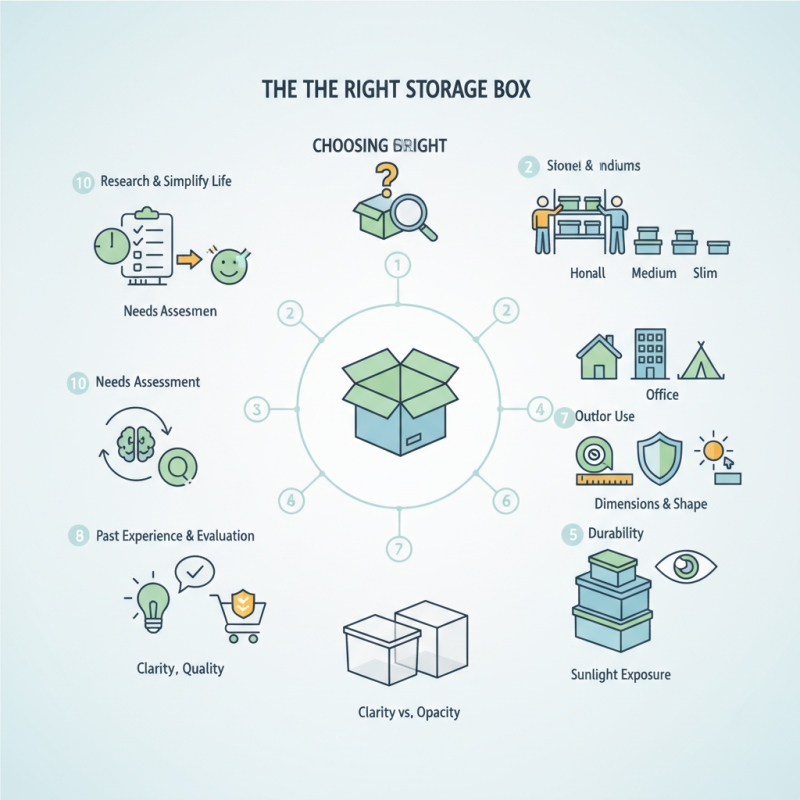
Choosing the right Plastic box for storage can significantly impact your organization and efficiency. With a plethora of options available, making an informed choice is crucial. The ideal plastic box should meet your specific needs, whether for home organization, office supplies, or even outdoor use.

Different sizes and shapes are available, tailored for various storage requirements. Consider what you need to store and the space available. It's essential to think about durability, clarity, and design. Are you looking for a stackable box? Will it be exposed to sunlight? These factors can influence the best choice for your situation.

Reflecting on your past experiences can guide your decision. Have previous plastic boxes lived up to expectations? Evaluate their effectiveness and learn from any shortcomings. Selecting the right plastic box requires understanding your needs and being mindful of quality. Take time to research and choose wisely. Your storage solution should simplify, not complicate, your life.
Top 10 Tips for Choosing the Right Plastic Box for Storage?

Factors Influencing the Size of Plastic Storage Boxes for Optimal Use

When selecting a plastic storage box, the size is crucial. Various factors can influence the dimensions you need. First, consider the items you plan to store. Bulky items like sports equipment require larger boxes. On the other hand, small tools or craft materials fit well in compact containers. Visualizing your items helps a lot.

Next, evaluate your available space. Measure the area where you intend to store these boxes. Vertical storage solutions may allow you to choose taller containers. In contrast, limited horizontal space might necessitate wider but shorter boxes. Additionally, think about how often you access these items. Frequently used items should be easier to reach and stored in more convenient sizes.

Another factor is future needs. Are you planning to add more items? Choose a slightly larger box to accommodate growth. However, don't overestimate; too much extra space can lead to clutter. Reflect on what works for you. An efficient storage solution balances size and accessibility. Knowing these influencing factors empowers you to make a practical choice in your storage journey.

Top 10 Tips for Choosing the Right Plastic Box for Storage

Tip Number Tip Considerations Size Influences
1 Determine Storage Needs Assess what items need storage. Volume and Shape
2 Choose the Right Material Consider durability and purpose. Weight and Strength
3 Check for Transparency Find items easily without opening. Visibility
4 Consider Stackability Maximize space efficiency. Height and Base Design
5 Look for Secure Lids Prevent dust and damage. Seal and Fit
6 Evaluate Size Options Match the box size to your needs. Length, Width, Height
7 Consider Environment Indoor vs Outdoor conditions. Heat, Moisture
8 Think About Mobility Will the box need to be moved? Weight and Handle Design
9 Look for Additional Features Such as wheels or compartments. Functional Design
10 Check Customer Reviews Get insights on performance. User Experience

Material Types: Choosing Between Polypropylene, PVC, and ABS for Durability

When selecting the right plastic box for storage, material choice plays a crucial role. Polypropylene, PVC, and ABS are popular options, each with unique attributes. Polypropylene is lightweight and resistant to chemicals, making it a favorite for storing food items. According to a report by the Plastics Industry Association, polypropylene's global market demand is projected to grow by 4% annually. Its durability ensures longevity in various environments.

PVC, or polyvinyl chloride, offers excellent flexibility. This material is more impact-resistant than polypropylene but may not be suitable for food storage due to leaching concerns. ABS (Acrylonitrile Butadiene Styrene) boasts outstanding mechanical strength. It's often used in applications requiring sturdier supports, like in automotive parts. Industry data suggests ABS has a higher resilience to temperature variations, making it ideal for outdoor use.

Choosing the right material isn't just about strength. Environmental considerations mount as the plastics industry faces scrutiny over sustainability. Each material raises questions about recyclability and environmental impact. Evaluating these factors alongside functional needs is vital. This process may seem straightforward but can lead to complexities that require careful assessment.

Understanding Weight Capacity Ratings: Ensuring Safe Storage Solutions

When selecting a plastic box for storage, understanding weight capacity ratings is crucial. Different boxes are designed to hold varying amounts of weight, and exceeding this limit can lead to breakage or safety hazards. Research indicates that over 40% of storage injuries are due to improper load handling. Acknowledging this data is vital for creating safe storage solutions.

An essential tip is to check the manufacturer's weight capacity rating. This rating often considers the material composition and intended use. A box designed for outdoor use may tolerate different conditions than one meant for indoor storage. Additionally, consider the distribution of weight. A densely packed box can be more difficult to handle and increases the risk of collapse. Test your setup with lighter items before loading it heavily.

Take note of safety features. Certain plastic boxes offer reinforced corners or ribbed designs for added strength. These can provide extra security for heavier loads. Understanding the statistics surrounding storage safety emphasizes the importance of these features. With the right choices, you can avoid accidents and maximize your storage efficiency.

Evaluating Lid Designs: Impact on Functionality and Accessibility for Users

Choosing the right plastic box involves not just size or shape but also the lid design. Lids come in various types, influencing how easily you can access your items. A hinged lid can offer quick access but may not seal as tightly as a snap-on design. Users need to think about the trade-offs. A secure lid can protect against dust but might be harder to open for some people.

Accessibility is crucial, especially for those with limited hand strength. A lift-off lid could be more suitable for these users. The ease of handling can reduce frustration. However, some designs may not provide a robust seal. It’s vital to analyze your specific needs. If you frequently remove items, a convenient lid is essential.

Consider also the compatibility of the lid with the contents. Some items require a tighter seal. Others, like seasonal clothing, might be fine with a loose fit. Reflecting on the purpose of your storage can lead to better choices. The right lid design impacts not just functionality but also user experience. Choosing wisely is worth the effort.

Environmental Considerations: Biodegradable Plastic Options in Storage Solutions

When selecting a plastic box for storage, it’s vital to consider environmental impacts. Traditional plastics can take hundreds of years to decompose. Recent data indicates that about 300 million tons of plastic are produced globally each year. A staggering 50% of this is single-use. This raises critical questions about sustainability in storage solutions.

Biodegradable plastics are emerging as a viable alternative. These materials can break down within a few years under the right conditions. For instance, studies suggest that products made from polylactic acid (PLA) decompose within three to six months in composting environments. While these options are more eco-friendly, they often come at a higher price. Users might grapple with budget constraints versus the desire for sustainable solutions.

In choosing biodegradable options, assess their durability. Not all biodegradable plastics are suitable for long-term storage. For instance, some may warp under heat or stress. This trade-off can be frustrating for consumers seeking both functionality and environmental responsibility. As the market evolves, finding the right balance remains a challenge, highlighting the need for continued innovation in storage solutions.

Environmental Considerations: Biodegradable Plastic Options in Storage Solutions

Are you ready? Let’s make your brand fresh and amazing.

Get Started