
How to Source Potassium Nitrate Saltpetre in 2026?

Sourcing Potassium Nitrate Saltpetre in 2026 requires more than comparing online prices. Buyers must confirm the intended, lawful application before contacting suppliers. Agricultural, laboratory, industrial, and food-related uses may involve different grades, documentation, and restrictions. Regulations can also vary between countries, regions, and end-use sectors.

A reliable sourcing process begins with supplier verification. Look for an established business address, traceable contact details, and clear product specifications. Request a current Certificate of Analysis, Safety Data Sheet, purity information, packaging details, and batch identification. Check whether the supplier follows recognized quality systems and can provide compliant transport documentation. Small details matter. A missing batch number can create serious uncertainty.

In 2026, responsible buyers should use authorized distributors, licensed chemical suppliers, or approved institutional procurement channels. Avoid anonymous marketplaces, vague listings, and sellers who discourage questions about end use. Potassium nitrate may be subject to controlled-chemical rules in some jurisdictions, even when purchased for legitimate purposes. Confirm local requirements with the relevant authority or compliance professional. This guide focuses on lawful, transparent procurement and practical due diligence. It does not replace legal advice. Some assumptions may still be incomplete, especially where regulations change quickly. A careful buyer keeps records, reviews every document, and chooses safety over convenience.
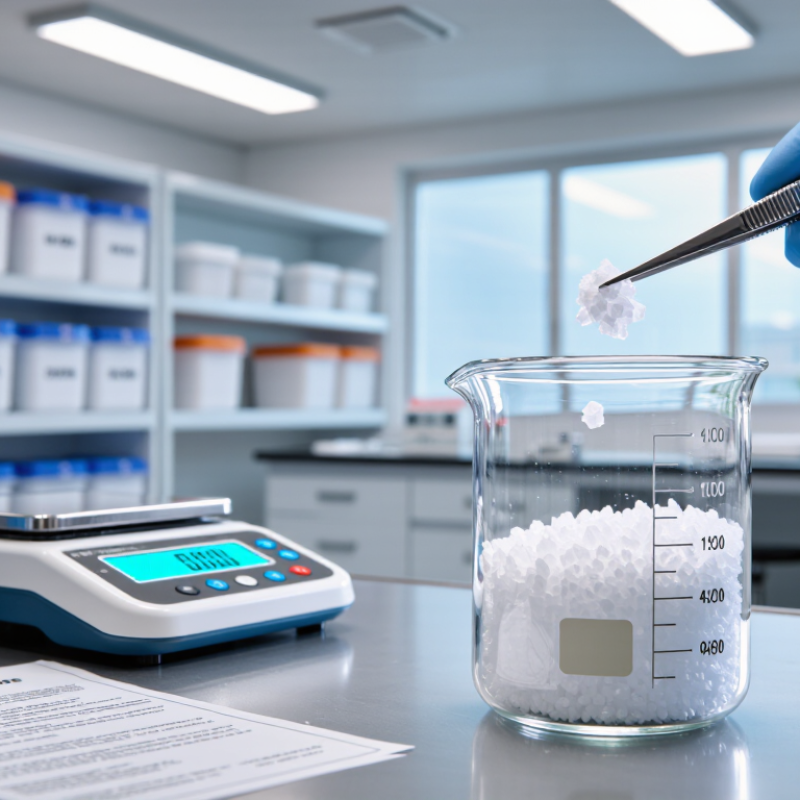
How to Source Potassium Nitrate Saltpetre in 2026?

Define Potassium Nitrate: KNO₃, CAS 7757-79-1, and 13-0-46 Grade

Potassium nitrate, written as KNO₃, is an inorganic salt identified by CAS 7757-79-1. In fertilizer markets, the 13-0-46 grade indicates 13% nitrogen, no available phosphate, and 46% soluble potash, expressed as K₂O. It commonly appears as white crystalline granules or powder and dissolves readily in water. These details matter when matching material to fertigation, greenhouse, or other lawful agricultural applications.

When sourcing potassium nitrate in 2026, request a current certificate of analysis for each production lot. Check assay, moisture, insoluble matter, particle size, and packaging condition. A reliable supplier should also explain origin, storage controls, transport classification, and applicable local requirements. Do not treat a product label as complete evidence. Documentation can be incomplete, and that deserves scrutiny. Confirm whether the stated 13-0-46 grade matches your technical specification, not merely the seller’s description.

Practical checks help. Inspect sealed bags for caking, tears, or dampness on arrival. Keep records of batch numbers and test results. Separate agricultural-grade requirements from food, laboratory, or industrial specifications, because these categories are not interchangeable. I would also compare two independent documents before approving a shipment. That extra step may feel slow. It often prevents an expensive mismatch. Source only through lawful, transparent channels with appropriate end-use verification.

Classify 2026 Uses: Fertilizer, Food, Industrial, and Laboratory Grades

How to Source Potassium Nitrate Saltpetre in 2026?

In 2026, potassium nitrate sourcing begins with the intended application, not the lowest quotation. Fertilizer grade supports crop nutrition and usually requires declared nutrient content, moisture limits, and batch traceability. Packaging should protect the crystals from humidity. A damp sack can become a costly problem.

Food grade demands stricter controls. Buyers should request food-compliance documents, purity data, contaminant testing, and clear labeling requirements for the destination market. It may support approved food-processing functions, but permitted use differs by jurisdiction. Never assume a technical grade is suitable for food contact.

Industrial grade may serve heat-transfer, metal-treatment, or manufacturing processes, depending on local approvals and site controls.

Laboratory grade requires tighter impurity specifications, a current certificate of analysis, and consistent lot performance. Ask for method references, storage conditions, and an SDS before purchase. Supplier audits and documented chain of custody add confidence.

No classification is perfect. Some sellers use vague terms, while buyers sometimes overlook moisture, particle size, or packaging integrity. A sensible review compares the specification with the real process, then confirms regulatory acceptance before payment or shipment. Keep records. Recheck every new lot.

Check Supplier Credentials, COA Data, Purity, and ISO 9001 Certification

Sourcing potassium nitrate, also called saltpetre, should begin with documented supplier credentials. Request the legal company name, manufacturing address, export history, and current quality-system certificate. ISO 9001 certification supports controlled processes, but it does not prove product purity. Verify the certificate number, scope, issuing body, and expiry date independently. A certificate with the wrong site is a warning sign.

The COA should identify the batch, production date, test methods, and authorized laboratory. Check potassium nitrate assay, nitrogen content, moisture, chloride, sodium, insoluble matter, and heavy metals. Compare reported values with the agreed specification, not only the headline purity.

The International Fertilizer Association’s 2024 outlook projects global fertilizer demand to approach 205 million tonnes of nutrients by 2028. That growth may increase supply pressure and encourage rushed documentation. Ask for a retained sample and an independent laboratory test before approving a larger shipment.

Small checks matter.

Purity claims can still be imperfect. I once treated a clean-looking COA as sufficient evidence; that was too optimistic. Test results need context, traceability, and repeatability. Confirm packaging integrity, lot markings, storage conditions, and transport records.

The OECD-FAO Agricultural Outlook 2024–2033 also highlights the importance of efficient fertilizer use and reliable input quality. Do not accept vague terms such as “industrial grade” without measurable limits.

Clear records protect procurement teams, growers, and downstream users.

Verify UN 1486 Transport Rules, GHS Oxidizer Labels, and Local Permits

How to Source Potassium Nitrate Saltpetre in 2026?

Potassium nitrate, or saltpetre, is regulated as UN 1486, an oxidizing solid in Class 5.1. The UN Model Regulations identify it under Packing Group III, subject to packaging and transport conditions. Confirm the current entry before shipment, because national rules can add quantity limits, route controls, or notification duties. The 2024 UNECE Model Regulations remain a practical reference for classification, documentation, and emergency information. A supplier’s certificate should show purity, batch number, safety data, and the correct transport description. Do not rely on an old SDS.

GHS communication also matters. The container normally requires the flame-over-circle pictogram and an oxidizer warning, with hazard statements matching the approved local classification. The European Chemicals Agency notes that classification depends on product composition and concentration. Local permits may involve chemical storage, fire prevention, import, or agricultural-use authorities. Requirements differ sharply between countries and sometimes between provinces. The IFA Medium-Term Fertilizer Outlook 2024–2028 highlights continuing growth in global fertilizer demand, but market growth does not remove compliance duties. Documentation must travel with the material.

Tips: Ask for a recent SDS, CoA, UN number, packing group, and transport test evidence. Check the importer’s permit before payment. Verify warehouse separation from fuels, oils, and reducing agents. Keep records of quantity, carrier, and destination. I have seen sourcing plans fail because one permit was assumed to cover every site. That assumption needs review.

Compare Quotes by Purity, MOQ, Incoterms, Lead Time, and Supply Security

How to Source Potassium Nitrate Saltpetre in 2026?

A reliable potassium nitrate quote should show more than a price per tonne. Request a current certificate of analysis covering nitrogen, K2O, chloride, moisture, insolubles, and particle size. UN Comtrade classifies potassium nitrate under HS 2834.21, helping buyers compare international trade records and declared volumes. Industry demand also matters. The International Fertilizer Association’s medium-term outlook places global fertilizer consumption near 200 million tonnes of nutrients annually through the late 2020s.

Compare offers on the same delivery basis. FCA, CIF, and DDP can produce very different landed costs. Confirm the named port, customs responsibility, insurance, packaging, and unloading terms. Record the minimum order quantity, pallet weight, container capacity, and production lead time separately from ocean transit. A 25-kilogram bag may suit trials, while bulk supply can reduce handling costs. But storage space becomes critical.

Supply security needs evidence, not reassuring language. Ask about production capacity, lot consistency, backup routes, safety stock, and disruption communication. The World Bank Commodity Markets Outlook shows that fertilizer prices can remain sensitive to energy and trade conditions. A supplier offering a twelve-week lead time should explain its assumptions. The cheapest quote often looks clever. It may not be. Pilot testing one shipment, checking independent laboratory results, and comparing two qualified sources can expose hidden quality or delivery risks. Verify applicable import, transport, storage, and agricultural regulations before contracting.

How to Source Potassium Nitrate Saltpetre in 2026? - Compare Quotes by Purity, MOQ, Incoterms, Lead Time, and Supply Security

Indicative 2026 sourcing benchmark for potassium nitrate (KNO₃, CAS 7757-79-1). Prices are shown in USD per metric tonne and should be confirmed against a formal quotation, destination, freight conditions, and applicable duties.

Offer Reference Typical Grade / Application Purity
(KNO₃, min.)
Typical Analysis Packaging MOQ Indicative Quote
(USD/MT)
Incoterm Estimated Lead Time Payment Basis Documentation Supply Security
Offer A
Bulk agricultural supply
Fertilizer grade
Water-soluble crop nutrition
≥99.0% Nitrogen: 13.5% min.
K₂O: 46.0% min.
Moisture: ≤0.30%
25 kg PP woven bags with PE liner; palletized 20 MT $610–690 FOB major Asian port 18–28 days after order confirmation 30% advance; 70% before shipment COA, SDS, packing list, commercial invoice, certificate of origin Medium
Strong production base; allocation may tighten during fertilizer demand peaks
Offer B
Containerized agricultural supply
Fertilizer grade
High-volume fertigation
≥99.4% Nitrogen: 13.5% min.
K₂O: 46.2% min.
Insoluble matter: ≤0.05%
Big bags of 500–1,000 kg; optional 25 kg bags 1 × 20-foot container
Approximately 20–22 MT
$640–725 CFR destination port 25–35 days, including export handling Irrevocable letter of credit at sight COA, SDS, SGS or equivalent inspection option, origin documents High
Container-ready loading and standard export documentation
Offer C
Industrial process supply
Technical grade
Heat-transfer salts and industrial formulations
≥99.5% Chloride: ≤0.020%
Sulfate: ≤0.010%
Moisture: ≤0.20%
25 kg laminated bags; 40 bags per pallet 5 MT $760–880 FCA warehouse 10–18 days from purchase order Net 30 days subject to credit approval Batch COA, SDS, technical data sheet, traceability statement High
Smaller MOQ and batch traceability support continuity planning
Offer D
Food-processing supply
Food grade
Approved food-processing applications where permitted
≥99.5% Assay: 99.5–100.5%
Lead: ≤2 mg/kg
Arsenic: ≤3 mg/kg
25 kg food-contact liner bags; palletized and stretch-wrapped 1 MT $1,050–1,320 DDP named destination, selected markets 30–45 days, including compliance review 50% advance; balance against shipping documents COA, SDS, allergen statement, food-contact declaration, origin documents Medium
Higher compliance requirements can extend approval and replenishment cycles
Offer E
Laboratory and specialty supply
Reagent or analytical grade
Small-batch laboratory use
≥99.8% Assay: 99.8% min.
Insoluble matter: ≤0.01%
Low-metal impurity profile
500 g, 1 kg, or 2.5 kg sealed containers; secondary cartons 100 kg $2,600–4,200 EXW or FCA distribution point 7–14 days if stocked; 6–10 weeks for production batches Payment before dispatch Lot-specific COA, SDS, specification sheet, traceability records Medium
Excellent batch control but limited capacity and higher stock-out exposure
Offer F
Regional distributor supply
Fertilizer or technical grade
Emergency and short-lead replenishment
≥99.0% Nitrogen: 13.0–13.5%
K₂O: 45.5–46.0%
Moisture: ≤0.50%
25 kg bags or 1,000 kg big bags, subject to local stock 1–5 MT $850–1,150 DAP local warehouse 2–7 business days from available stock Payment before delivery or approved account terms COA, SDS, delivery note, local tax invoice High
Fast access and low MOQ; dependent on regional inventory
Offer G
Long-term contracted supply
Fertilizer grade
Annual procurement program
≥99.2% Nitrogen: 13.5% min.
K₂O: 46.0% min.
Chloride: ≤0.10%
25 kg bags or 500 kg big bags; customized markings available 100 MT per quarter $575–655 CIF named destination port 30–45 days per scheduled shipment Letter of credit or 30% advance with balance against documents COA, SDS, inspection certificate, origin documents, shipment records High
Reserved production capacity and scheduled deliveries reduce spot-market exposure

Comparison basis: potassium nitrate is commonly specified by KNO₃ assay together with approximately 13.5% nitrogen and 46% K₂O for fertilizer-grade material. Final purchasing decisions should verify the latest COA, impurity limits, packaging, dangerous-goods classification where applicable, import requirements, freight surcharge, and delivery performance before award.

Are you ready? Let’s make your brand fresh and amazing.

Get Started