
Choosing Wine Bottle Gift Boxes is a practical business decision, not merely a finishing touch. A box must protect the bottle, fit the occasion, and represent your brand before the recipient uncorks it. Small details matter: a snug insert, clean edges, and a closure that does not snag.
Market context makes thoughtful packaging more relevant. The International Organisation of Vine and Wine’s State of the World Vine and Wine Sector in 2023 estimated global wine consumption at 221 million hectolitres, a 2.6% decline from 2022. In a competitive category, a well-chosen gift box can help a product stand out on a shelf or arrive looking considered. McKinsey’s 2020 consumer research on packaging also found strong interest in sustainable packaging, including recyclability. That preference is worth weighing alongside durability, cost, and appearance.
There is no single best box. A heavy rigid carton may suit a premium business gift, while a recyclable paperboard design can work better for larger seasonal orders. Test the real bottle, not just the listed dimensions. Check how the box handles shipping, storage, and a damp hand. A beautiful sample can still disappoint. This guide explores the choices businesses should compare, from materials and inserts to branding and order quantities. It also leaves room for a useful question: are you paying for protection and presentation, or just a decorative layer?
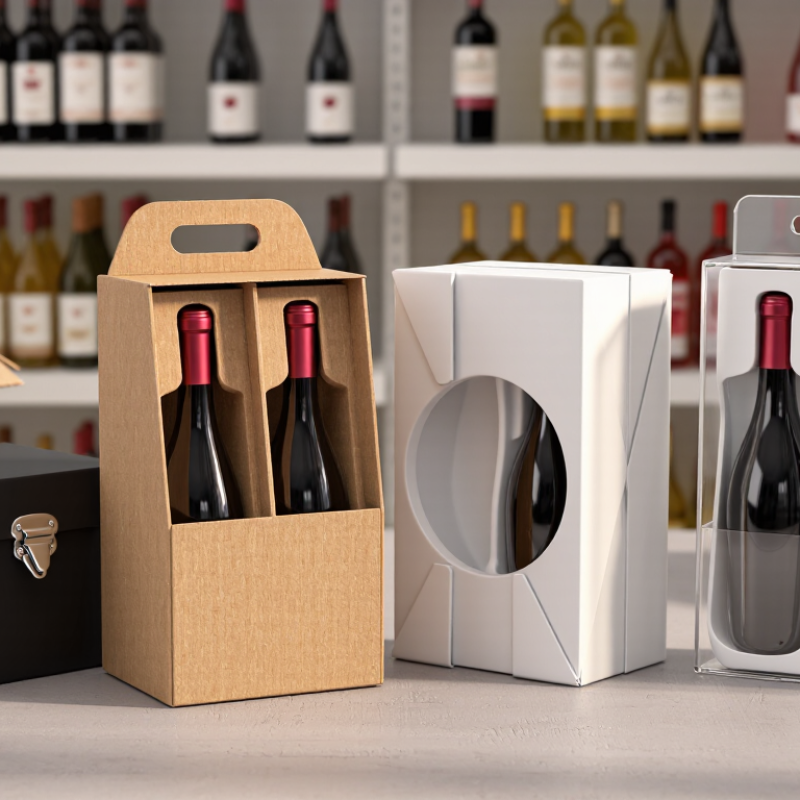
Identify the occasion before choosing a wine bottle gift box. A client thank-you, holiday shipment, and staff celebration need different levels of formality. The U.S. National Retail Federation’s 2024 holiday survey found shoppers planned to spend an average of $902, including $641 on gifts. That broad retail figure is not wine-specific, but it shows why businesses should set a clear per-recipient budget. A rigid, premium box may suit a small VIP list; a lighter, stackable carton can make larger shipments easier to store and handle.
Fit matters. Match the box to the bottle’s height, diameter, and closure, then test it with tissue or a card inside. For delivery, check the insert, corners, and lid against a real shipping trial; an attractive box that shifts in transit is a poor choice. Gallup’s 2023 survey found 31% of U.S. adults named wine as their preferred alcoholic drink, close to beer at 34%. That supports wine as a familiar gift option, though preferences vary by recipient and occasion. Ask about dietary, cultural, or workplace preferences before ordering. I would also compare samples under ordinary office lighting. Colors can look different in person. It is easy to overlook the unboxing moment: a handwritten note, a simple opening, and manageable packaging can feel more thoughtful than extra decoration.
| Business Need or Gift Context | Typical Quantity | Box Style to Consider | Protection and Delivery Needs | Personalization Options | Practical Buying Considerations |
|---|---|---|---|---|---|
| Client appreciation Thank-you gifts for valued customers or business partners | Small to medium batches; often prepared for a selected recipient list | Rigid single-bottle box or a two-bottle box with a secure divider | Choose a snug insert that limits bottle movement; add an outer shipping carton for delivery | Printed greeting card, simple logo-free message, or recipient name | Confirm bottle dimensions, gift presentation, and whether the box will be delivered directly to recipients |
| Holiday gifting Seasonal gifts for employees, clients, or suppliers | Medium to large batches, sometimes ordered well ahead of the holiday period | Folding carton for easier storage, or a rigid box for a more substantial presentation | Use a fitted insert and sturdy outer packaging if gifts will be shipped or handled in bulk | Seasonal sleeve, greeting card, or a coordinated ribbon | Allow time for production, packing, and delivery; check storage space and seasonal shipping schedules |
| Employee milestones Work anniversaries, promotions, or retirement gifts | Small, occasional orders or recurring batches throughout the year | Single-bottle box with a protective insert; choose a reusable style when appropriate | Consider the gift’s travel route and whether recipients will carry it home | Personal note, milestone message, or printed event card | Keep the format easy to assemble and store if gifts are prepared by an internal team |
| Events and conferences Speaker gifts, hosted dinners, or attendee giveaways | Quantity depends on attendance and the number of designated recipients | Lightweight folding box for easier transport, or a presentation box for invited guests | Protect bottles during transport to the venue; use a divider for multi-bottle sets | Event insert or printed message that fits the occasion | Check venue rules, transport arrangements, packing time, and applicable alcohol-gifting requirements |
| Premium hospitality Welcome gifts or special-occasion amenities | Low to medium quantities, replenished as needed | Rigid box with a clean, refined finish and a well-fitted insert | Prioritize secure bottle positioning and presentation after handling | Printed welcome card or discreet custom sleeve | Choose materials and finishes that suit the setting while remaining practical to store and restock |
| Direct-to-recipient shipping Gifts sent individually to homes or offices | Variable quantities; each package may have a separate destination | Gift box sized to the bottle and designed to fit inside a protective shipping carton | Use a secure insert and adequate outer cushioning; confirm packaging meets carrier and local rules | Gift note or printed message packed with each order | Verify destination restrictions, carrier requirements, breakage procedures, and address-list accuracy before dispatch |
| Lower-waste packaging goals Businesses seeking simpler or more recyclable packaging | Any quantity, depending on the gifting program | Paperboard or corrugated box with a minimal design and an appropriately sized insert | Do not reduce protection below what the handling and delivery route require | Printed message on the box or a small paper card instead of extra decorative components | Check local recycling guidance for the selected materials and avoid unsupported environmental claims |