
How to Choose the Right HDPE Bottle for Your Business?

Choosing the right hdpe bottle is not just a packaging decision. It can affect product protection, filling efficiency, shipping costs, and how customers use your product. A bottle that looks sturdy on a sample table may behave differently on a fast filling line. Small details matter. Wall thickness, neck finish, cap fit, and bottle shape can all influence performance. So can the product itself: its ingredients, temperature, and storage conditions.

A useful selection process starts with clear requirements. Define the fill volume, dispensing method, expected handling, and any light or moisture protection needs. Then compare bottle dimensions, material specifications, closure options, and available technical documents. Ask the supplier about compatibility, testing methods, and production tolerances. Where possible, test filled samples under realistic storage and shipping conditions. A label that wrinkles or a cap that leaks can reveal more than a polished product photo. Still, no sample test can answer every question, and supplier information deserves careful review. That part is easy to rush.

This guide explores the practical factors businesses should weigh before choosing a bottle. It considers product compatibility, design, closures, customization, quality checks, and cost beyond the unit price. The best choice is rarely the thickest or cheapest option. It is the one that fits the product, equipment, and customer experience—with evidence to support the decision.
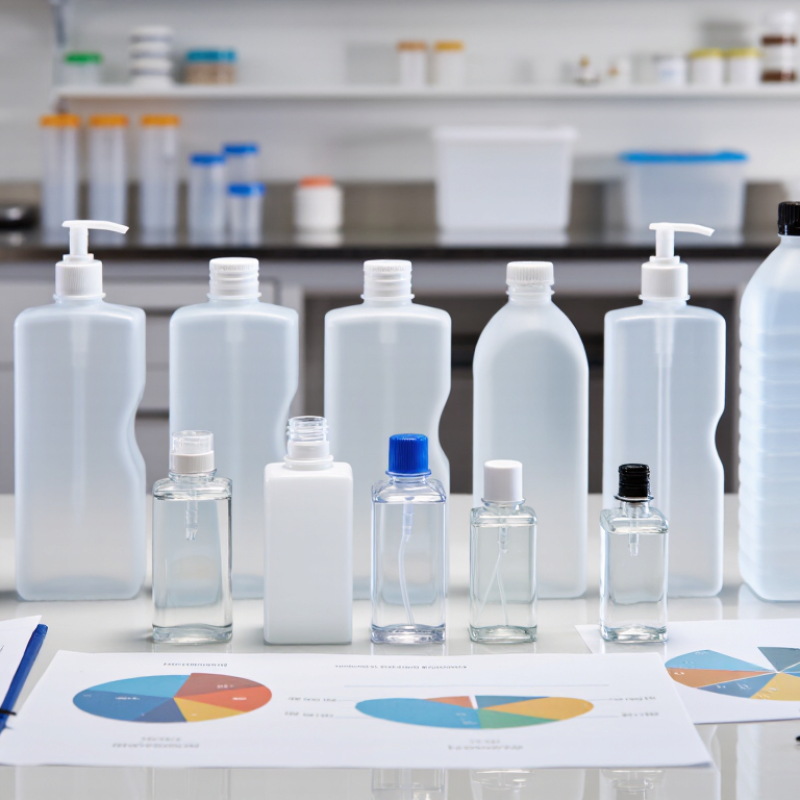
How to Choose the Right HDPE Bottle for Your Business?

Define Product Requirements: HDPE Density Typically Ranges from 0.941–0.965 g/cm³

Choosing an HDPE bottle starts with the product, not the catalog photograph. HDPE density typically ranges from 0.941 to 0.965 g/cm³, but that range does not describe every performance detail. Higher-density grades often feel stiffer and may support better shape retention, while resin structure and bottle design also matter. Density is a clue.

Write down what the package must withstand: contents, filling temperature, storage time, and shipping conditions. A thin-wall bottle holding a viscous liquid may need more resistance to paneling than a thicker bottle used briefly. Check whether the bottle must squeeze easily, stand firmly, or fit a specific closure. Small neck-finish differences can cause leaks, even when the body looks right.

Ask suppliers for the resin grade’s density data and technical sheet, then compare samples filled with your actual product. Inspect weight, wall distribution, cap fit, and leakage after handling and temperature changes. Not the whole answer. A lab result is useful, yet it may not reproduce a hot warehouse or rough delivery route. One trade-off is easy to miss: choosing a stiffer grade can affect squeeze feel and cost. Confirm those details before approving production.

How to Choose the Right HDPE Bottle for Your Business? — Define Product Requirements: HDPE Density Typically Ranges from 0.941–0.965 g/cm³

Requirement What to Define Practical Selection Guidance What to Verify
Product and use Identify the contents, intended user, dispensing method, and storage conditions. Choose a bottle design suited to the product’s viscosity, usage frequency, and dispensing needs. Confirm the intended application with the bottle and closure supplier.
Resin density Specify the HDPE resin requirements for the application. HDPE density typically ranges from 0.941–0.965 g/cm³. Density alone does not determine bottle performance. Check the resin grade’s technical data sheet and the finished package’s performance requirements.
Fill volume and dimensions Set the required fill volume, headspace, overall height, and available shelf or shipping space. Select a nominal bottle capacity that accommodates the product fill and the filling process. Review drawings and test filled bottles on the actual filling line and in the intended secondary packaging.
Neck finish and closure Define the neck dimensions and the closure type, such as a screw cap, dispensing closure, or child-resistant closure where required. The bottle neck and closure must be designed as a compatible system. Verify fit, opening and closing performance, leakage resistance, and any required tamper-evident features.
Wall and bottle design Set requirements for wall thickness, shape, grip, stability, and resistance to handling or shipping loads. Geometry and material distribution influence stiffness and package performance; assess the complete bottle rather than resin density alone. Evaluate samples with drop, compression, leak, and handling tests appropriate to the product and distribution conditions.
Chemical compatibility Consider the product formula, concentration, contact time, and storage temperature. HDPE is used for many packaging applications, but compatibility depends on the specific contents and conditions. Conduct compatibility testing with the actual formulation in the proposed bottle and closure.
Barrier and shelf life Define sensitivity to moisture, oxygen, light, or loss of volatile ingredients. Do not assume an HDPE bottle alone provides the barrier performance required for every product. Validate shelf life and package performance under representative storage conditions; consider a suitable barrier solution if needed.
Filling and sealing process Specify filling temperature, line speed, capping method, and any induction-sealing or liner requirements. Make sure the bottle and closure can be processed consistently on the intended equipment. Run production-line trials and check seal integrity, cap application, and package deformation.
Regulatory and labeling needs Identify the market, product category, labeling area, and applicable packaging requirements. Requirements vary by product type and jurisdiction; confirm suitability for the intended use rather than relying on a generic material description. Review applicable regulations and obtain relevant supplier documentation before launch.

Selection tip: Confirm the bottle, closure, product, and filling process as a complete packaging system before placing a production order.

Select Bottle Features for the Product’s Fill Volume, Closure, and Dispensing Needs

How to Choose the Right HDPE Bottle for Your Business?

Match the bottle’s usable capacity to the amount customers receive, not just its stated brimful volume. A 500 mL bottle may need extra headspace for filling, settling, or temperature changes. Ask your packaging supplier for the bottle’s overflow capacity and test it with your actual filling process. Small details matter.

The product’s texture should guide the opening and dispensing design. Thin liquids may pour cleanly through a narrow neck, while thicker formulas often need a wider opening or a dispensing cap. If customers use only a few drops at a time, check that the orifice controls flow without clogging.

A cap that works in a sample test can behave differently when the product is cold or more viscous. Test before ordering.

Consider how people will handle the bottle. A flip-top can be easier to open with one hand, while a screw cap may suit products that need secure closure during storage and transport. Check that the closure fits the neck finish, seals consistently, and is practical for your filling line. Then test filled bottles upright, on their sides, and after repeated opening. A simple leak test is useful, but it cannot replace checks under real shipping and storage conditions. You may not get every feature right on the first try. Record what works, and revise the specification before placing a large order.

Check Resin Identification Code #2 Against ASTM D7611 and Local Recycling Rules

When comparing HDPE bottles, check the resin identification mark and the supplier’s material documentation. ASTM D7611/D7611M defines the Resin Identification Code system; code #2 identifies high-density polyethylene. It helps identify the resin, but it does not certify that a bottle will be accepted or recycled. That distinction matters.

Check the recycling rules where your customers live and where collected packaging is processed. Acceptance can vary by municipality and sorting facility. Ask whether the bottle, cap, label, and any sleeve are accepted together. A dark opaque bottle or a full-body label may affect sorting in some systems. Details count.

Before approving a design, share a sample with your local recycling program or waste contractor. Ask about bottle size, color, closure material, and label coverage. If possible, test the complete package, not just a clean bottle without its cap. A code is useful. It is not a recycling promise. Requirements change, and local guidance can be unclear; record the advice you receive and revisit it as your packaging or sales regions change.

How to Choose the Right HDPE Bottle for Your Business

Check Resin Identification Code #2 against ASTM D7611 and local recycling rules.

ASTM D7611 maps resin identification code #2 to HDPE. The code identifies the plastic resin; it does not guarantee that a bottle will be accepted for recycling. Before selecting a bottle, confirm acceptance with the local recycling program and check requirements for its cap, label, color, and format.

Reference: ASTM D7611, Standard Practice for Coding Plastic Manufactured Articles for Resin Identification. Local recycling rules vary.

Verify Food-Contact Suitability Under U.S. FDA Regulation 21 CFR 177.1520

Choosing an HDPE bottle for food use takes more than checking the resin name. It is tempting to treat “HDPE” as the answer. It isn’t. U.S. FDA regulation 21 CFR 177.1520 sets specifications and use conditions for certain olefin polymers, including polyethylene. The specific resin grade and its formulation matter, as do the bottle’s intended use and manufacturing details.

Ask the supplier for a written food-contact compliance statement that identifies the resin and the applicable regulatory basis. Check that it covers your actual product, such as an acidic sauce or cooking oil, and the expected filling temperature, storage time, and contact conditions. A statement for the resin alone may not address every part of the package. That matters. Caps, liners, colorants, and other components may have separate requirements or documentation. Confirm that the supplier’s information covers the complete bottle assembly where relevant, and keep the records with your packaging specifications.

Review the details, not just a generic “FDA compliant” claim. Does the documentation name 21 CFR 177.1520? Does it match your planned use? If the bottle will be hot-filled or hold a fatty food, ask the supplier to confirm suitability for those conditions. Do not assume that a bottle used successfully for water will perform the same way with oil. If the intended use changes, revisit the documentation. This step can feel paperwork-heavy, and a vague answer is a reason to ask more questions.

Compare Supplier Samples for Leakage, Chemical Compatibility, and Drop Resistance

Choosing an HDPE bottle starts with testing the actual sample, not relying only on a specification sheet. Ask each supplier for matching bottle, cap, liner, and resin details. Small differences matter.

Fill samples with the intended product, then close them using the planned production method. Store them upright and on their sides over a defined period. Check the neck, cap, and bottle walls for seepage or residue. Even a dry exterior can hide a loose closure. Record fill level, temperature, and inspection times so results can be compared fairly. One quick check is not enough.

Chemical compatibility needs time. Observe samples for softening, swelling, odor transfer, discoloration, or stress cracks. Test under realistic storage conditions, and consult qualified packaging or materials specialists when contents are unfamiliar. For drop resistance, use filled bottles and repeat drops from likely handling heights onto a consistent surface. Inspect for leaks, split seams, cap movement, and dents that do not recover. Keep the method consistent across suppliers. A dent may look harmless; that assumption deserves a second look. Choose a sample that performs reliably across all three tests, not merely the thickest-looking bottle.

Are you ready? Let’s make your brand fresh and amazing.

Get Started