
How to Choose Carbonless Paper Rolls in 2026?

Choosing a Carbonless Paper Roll in 2026 is less about finding the cheapest roll and more about matching its construction to the job. A two-ply invoice, a three-ply delivery form, and a point-of-sale receipt each place different demands on coating, image transfer, and printer compatibility. Small mismatches matter. A roll that is too wide can catch in the printer; weak transfer coatings can leave the final copy pale.

Smithers’ specialty-paper market research, including The Future of Specialty Papers to 2028, provides useful context for evaluating papers designed around specific performance needs. For sustainability context, the American Forest & Paper Association estimated a 65–69% U.S. paper recycling rate for 2023. That figure covers paper overall, not carbonless grades specifically. It should not be treated as proof that a particular roll is recyclable in every local system.

Before choosing, compare ply count, paper weight, roll width, core size, outside diameter, and the printer manufacturer’s specifications. Ask suppliers for current technical data sheets and, when possible, test a sample in the actual machine. Check that writing pressure produces legible copies across every ply. Keep rolls dry and protected from heat; storage conditions can affect performance. There is no universal best roll. Even a clear specification sheet may not reveal how a roll behaves during a busy shift. That is worth remembering.
How to Choose Carbonless Paper Rolls in 2026?

Map the Form: Select 2–6 Plies and Match CB, CFB, and CF Layers

Begin with the form’s journey: how many people need a copy, and who keeps each one? Two-part forms usually pair a CB top sheet with a CF bottom sheet. For three or more plies, CFB sheets sit between them, transferring the image to the next copy. CB carries microcapsules on its back; CF has a reactive coating on its face. Keep the coated surfaces in contact. The top sheet needs CB, each middle sheet needs CFB, and the final sheet needs CF.

Choose two to six plies only when the workflow needs them. Extra copies can become faint, especially when handwriting pressure is light. Check legibility on the last ply using the actual pen, form stock, and writing surface. Test before ordering. A small trial may reveal more than a tidy specification sheet.

Paper disposal deserves a practical check, too. The U.S. Environmental Protection Agency’s Advancing Sustainable Materials Management: 2018 Fact Sheet reports a 68.2% recycling rate for U.S. paper and paperboard. That broad figure does not guarantee acceptance of carbonless forms; coatings and local sorting rules matter. Ask the paper supplier or local recycler about the finished form. It is easy to over-specify the copy count, and easy to miss how the last sheet will be handled.

Compare Common 48–60 g/m² Grades Using ISO 536 Grammage Testing

Carbonless paper rolls are often compared at 48, 50, 55, and 60 g/m². These are nominal grade examples, not a universal market ranking. Grammage measures mass per square metre; it does not confirm coating quality, opacity, or smooth feeding. Small differences matter. A 48 g/m² sheet may reduce roll weight, while a 60 g/m² sheet can feel firmer. The right choice depends on ply combination, printer settings, and the clarity needed on the final copy.

For an objective comparison, test samples using ISO 536:2019, which specifies how to determine paper grammage. Condition samples consistently, cut accurately measured pieces, and weigh them on a calibrated balance. Compare the measured result with the supplier’s stated tolerance, not only the nominal label. ISO 187:2022 describes standard atmospheric conditions for conditioning paper before testing. These controls make comparisons more reliable. They do not replace a printer trial.

Tips: Test each grade with the intended roll width and paper path. Check for clean feeding, readable copies, and dust around the cutter. Keep the results. A neat number can still mislead; coating variation may matter more than a small grammage change.

Check Roll Width, Core Diameter, and Outer Diameter Against Printer Limits

How to Choose Carbonless Paper Rolls in 2026?

Measure the roll width, core diameter, and outer diameter separately. A roll can fit the printer’s width guide but still have a core that will not sit on its spindle. Check the printer manual for maximum dimensions, then compare them with the supplier’s specifications. For example, an 80 mm-wide roll with a 12 mm core may still be too large if its outer diameter exceeds the compartment clearance. Leave a little room for measurement variation. Small details matter.

Carbonless paper is often made in several plies, so its total thickness affects how much paper fits within a given outer diameter. TAPPI T 410 specifies a method for measuring paper grammage, while ISO 534 covers paper thickness measurement. These standards help suppliers describe paper consistently; they do not define your printer’s roll limits. Ask for actual roll measurements, not just a nominal size. I have seen “fits most printers” claims leave too much guesswork.

Tips: Measure the spindle, roll compartment, and width guide with a ruler or caliper. Compare all three results with the printer’s stated limits, and confirm whether the listed diameter refers to the finished roll. If the clearance is tight, test one roll first. A small mismatch can stop the feed.

How to Choose Carbonless Paper Rolls in 2026?

Check roll width, core diameter, and outer diameter against your printer limits.

Common nominal widths: 57.5 mm (about 2.25 in) and 76 mm (about 3 in). These are examples, not universal printer specifications. Before ordering, confirm the printer’s supported paper width, core diameter, and maximum roll outer diameter. Core and outer diameters vary by printer and roll construction.

Test Image Transfer Across the Full Form Set Before Ordering

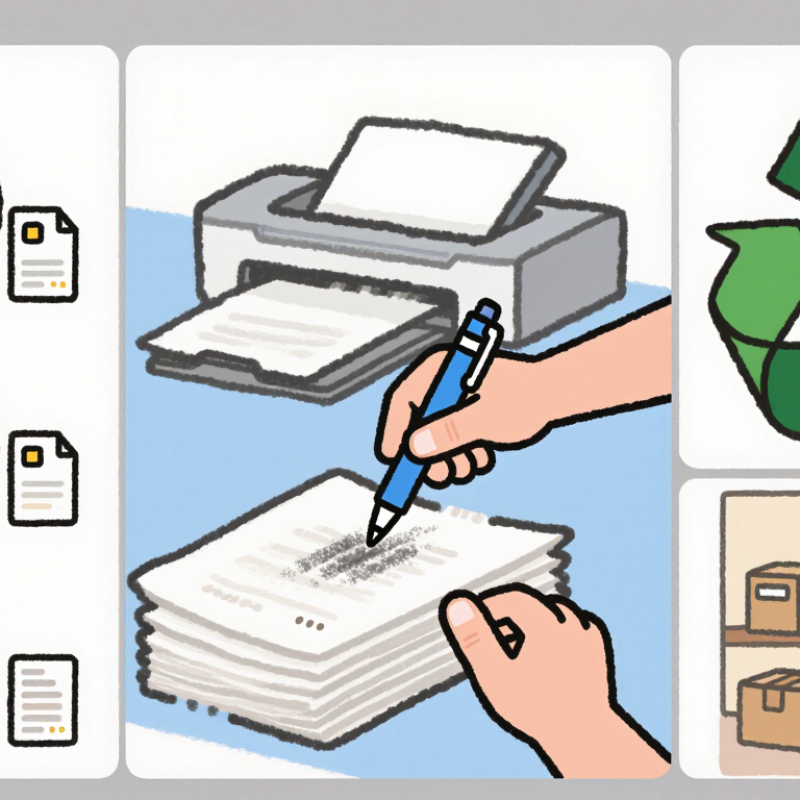
Before ordering carbonless paper rolls, test image transfer across the entire form set. A clear top copy does not guarantee readable lower copies. Print a sample using the same printer, settings, and form thickness you expect in daily use. Then inspect every sheet under ordinary office lighting.

Check fine details, not just large text. Look for faint invoice numbers, broken lines, and signatures that disappear on the last copy. Check every layer. Write on the form with a regular ballpoint pen, using light and firm pressure. Compare the results, and note where the image starts to fade. If your forms contain several plies, test the complete stack rather than separate sheets.

Allow the sample to sit before judging it. Toner or ink may look different after drying, and handling can reveal smudging. Repeat the test with a fresh section of the roll; pressure and feed alignment can vary. Keep a sample from each trial for comparison. One practical test can miss a problem, especially when the printer is warm or the paper has been stored in a humid room. That detail is easy to overlook. Record the roll width, ply count, printer model, and settings alongside your results, so the next order matches a setup you have actually checked.

Verify Paper Performance at 23°C and 50% RH Under ISO 187 Conditioning

How to Choose Carbonless Paper Rolls in 2026?

A roll can look flawless and still produce faint copies or feed unevenly. Check performance under controlled conditions, not just straight from the carton.

ISO 187:2022 specifies a standard atmosphere of 23 ± 1°C and 50 ± 2% relative humidity for conditioning paper samples. Keep rolls in that environment until their temperature and moisture have stabilized. Don’t rush this step. A cold roll moved into a warm room may give misleading test results.

At 23°C and 50% RH, test actual forms for copy legibility, image transfer, curl, and smooth feeding. Record the number of usable copies and inspect fine details, such as a pale signature line near the edge.

TAPPI T 402 also addresses standard atmospheres for conditioning and testing paper, offering a useful cross-check for mill or supplier procedures. Compare samples from different lots under identical conditions; otherwise, results are hard to interpret.

There’s a catch: conditioning alone cannot predict every press or printer setup. Test on the equipment and with the impact settings used in daily work, then document any change in copy clarity or roll behavior.

One overlooked detail can matter. A practical test log beats a confident guess.

Are you ready? Let’s make your brand fresh and amazing.

Get Started