
How to Choose the Best Recliner for a Small Business?

Choosing a Recliner For Small Business means balancing comfort with the realities of a working space. A chair that looks inviting in a showroom may crowd a narrow reception area or block a walkway. In a salon, clinic, or guest lounge, measure the recliner fully extended—not just upright. Check doorways, floor clearance, and access to nearby outlets before ordering. Small details matter.

Ergonomics researcher Dr. Alan Hedge is often associated with the principle, “The best posture is the next posture.” It’s a useful reminder: no recliner suits every person or every task. Consider who will use the chair, how long they’ll sit, and whether easy entry and exit matter. Adjustable support, wipe-clean upholstery, sturdy mechanisms, and a warranty can all shape the purchase. Yet a feature list cannot replace a real sit test.

This guide will help you compare size, comfort, materials, durability, and cost without losing sight of your business needs. It will also look at placement, routine cleaning, and questions to ask suppliers. A quick measurement and a careful trial can prevent an expensive mismatch. Still, there is no perfect chair for every room. A choice that works today may feel less practical after customer traffic changes. That deserves a second look.
How to Choose the Best Recliner for a Small Business?

Identify the Business’s Seating Needs and Intended Use

Before comparing recliners, map who will use them and why.

A clinic waiting area, a small office lounge, and a salon’s quiet corner have different seating needs. Ask whether visitors sit for five minutes or an hour, and whether staff use the chair between appointments.

Short visits. Long visits. Both matter.

Observe the room during its busiest hour. Note doorway width, walking routes, nearby tables, and whether a fully reclined chair would block access. Measure the chair upright and reclined, then leave enough space for people to pass.

Consider users’ range of heights and mobility. A low seat may be difficult to rise from, while a tall back can overwhelm a narrow room. If staff need easy cleaning, look for durable, wipeable upholstery and check the care instructions, controls, and stated weight capacity.

Don’t assume every visitor wants to recline; some prefer a firm, upright seat. Ask staff what they notice, or test a chair before buying several.

The plan may still miss something: mechanisms can be noisier than expected, and upholstery may retain heat. Track feedback after installation and adjust placement or use.

Measure Available Space and Plan the Recliner Layout

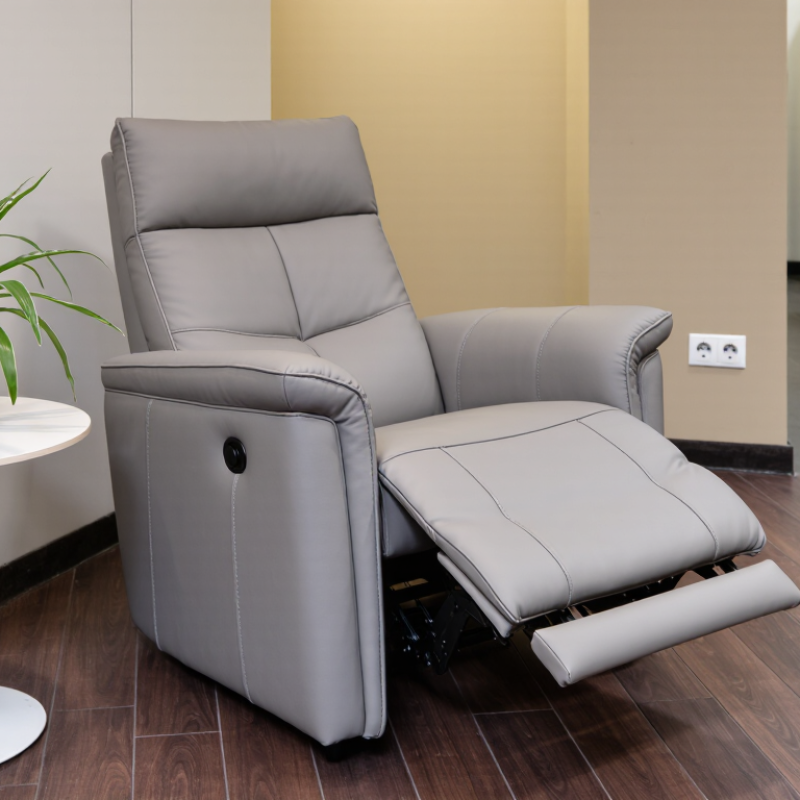
Measure the room before comparing recliners. Record the width and depth of each usable area, including corners and door swings. Then check the chair’s dimensions when fully reclined, not only when upright. A recliner may need several extra inches behind it or in front for the footrest. Check the manufacturer’s clearance guidance, since designs differ. Measure doorways, hallways, and elevators too; the chair must fit through the route into the room.

Mark each proposed chair footprint on the floor with painter’s tape. Include space for people to sit down, stand up, and pass without turning sideways. Keep the main walkway clear, especially near a counter or entrance. Consider nearby outlets if the chair has powered adjustments, and leave room for staff to clean around it. A paper layout can look roomy. Real traffic may prove otherwise. That happens. If possible, test a similar chair in the space before ordering, and watch how customers and staff move around it. A small layout change can prevent a daily bottleneck.

Compare Recliner Types, Features, and Accessibility

For a small business waiting area, compare footprint before upholstery. Small rooms punish bulk. A wall-hugger recliner sits closer to the wall, while a manual model avoids cords and often costs less. But its lever may be difficult for some visitors to use. Power recliners offer button controls and smoother adjustment, yet need an outlet and space for the footrest. CDC’s 2018 Behavioral Risk Factor Surveillance System analysis estimated that 13.7% of U.S. adults had a mobility disability. That figure makes easy entry and exit a practical design concern, not a decorative extra.

A lift-assist recliner can help users rise, but it is not a substitute for individual mobility advice. Check seat height, firm armrests, control placement, and whether a visitor can approach without crossing another person’s path. Measure the open footrest, doorway, and route to the chair; a compact chair can still block an aisle. ANSI/BIFMA X5.4-2020 covers strength, durability, and stability testing for lounge seating, so ask suppliers for relevant test documentation. Then test the chair yourself: sit, recline, and stand using the controls. I would not assume “accessible” from a product label alone; the room layout can undo a good choice.

Evaluate Durability, Cleaning, and Maintenance Requirements

How to Choose the Best Recliner for a Small Business?
Evaluate Durability, Cleaning, and Maintenance Requirements

In a small business, a recliner may serve many people each day. Check the frame, joints, and reclining mechanism before choosing a style. Metal parts should move smoothly, without squeaks or wobbling. Ask how replacement parts are handled, since a minor repair can be easier than replacing the chair. Strong upholstery matters, too. Look for tightly stitched seams and fabric rated for frequent use. A showroom test is useful, but it cannot show how a chair will hold up after months of daily use.

Cleaning needs depend on your setting. For a waiting room or staff lounge, choose upholstery that can be wiped with mild cleaner and dried quickly. Check the care instructions first; some cleaners may discolor fabric or damage protective coatings. A light-colored chair can brighten a small room, but it may show marks sooner. That trade-off is easy to underestimate. Also check whether crumbs can collect around buttons, seams, or reclining joints.

Tips: Keep a simple maintenance log. Check bolts and moving parts monthly, and clean spills promptly. Test cleaning products on a hidden spot. If staff cannot clean the chair quickly, its care routine may be too demanding. A practical choice is not always the most attractive one, and that is worth considering.

Set a Budget and Assess Suppliers Before Buying

Set a working budget before comparing recliners. Include more than the purchase price: delivery, assembly, fabric protection, and possible repairs all affect the real cost. For a small waiting room, measure the chair’s full reclined length, not just its footprint upright. Leave space for people to pass safely. A tape measure and a quick floor plan can prevent an expensive mistake.

Ask suppliers for written quotes with delivery fees, lead times, warranty coverage, and return conditions. Check whether replacement parts, such as handles or footrest mechanisms, are available. A low price may be less useful if a chair sits unused while repairs are arranged. Ask who handles service and how quickly they typically respond. Get the details in writing.

If possible, test the recliner with the kinds of users your business serves. Notice whether the controls are easy to reach and whether the upholstery can be cleaned without special products. Compare two or three suppliers using the same questions; it makes differences easier to spot. I’ve found that a neat quote can still leave out small costs. That part is easy to miss. Keep a modest reserve, even if it means choosing simpler upholstery or fewer extras.

How to Choose the Best Recliner for a Small Business? - Set a Budget and Assess Suppliers Before Buying
Supplier Type Indicative Price per Chair (USD) Typical Delivery Planning Warranty and Returns to Check Supplier Assessment Questions Potential Fit
General online furniture retailer $250–$700 Confirm the quoted delivery window, freight charges, and whether delivery is curbside or room-of-choice. Check the written warranty by component, return period, return freight, and any restocking fee. Are dimensions, weight capacity, upholstery details, and assembly requirements listed? Is a replacement part available? Businesses seeking a lower upfront cost and able to verify fit and service terms before ordering.
Local furniture dealer $400–$1,000 Ask for a written estimate covering delivery, installation, and removal of packaging. Confirm whether the dealer or manufacturer handles claims and what proof of purchase is required. Can staff inspect or try the chair? Can the dealer provide a written quote and explain post-sale support? Buyers who value local assistance, in-person inspection, or coordinated delivery.
Commercial furniture supplier $700–$1,800 Lead times may depend on upholstery and order size; get a confirmed estimate before setting an opening date. Request the complete commercial warranty, including coverage limits for mechanisms, frame, and upholstery. Is the chair specified for the intended setting and expected use? Are replacement parts and service available? Businesses expecting frequent use or needing documented product specifications and purchasing support.
Refurbished or used furniture dealer $150–$700 Confirm stock availability, delivery cost, and whether each chair is inspected before sale. Ask whether the item is sold as-is, whether any limited warranty applies, and what return options exist. Can the seller document the chair’s condition and test the reclining mechanism? Are stains, repairs, or missing parts disclosed? Businesses prioritizing lower initial spending and willing to inspect condition carefully.
Planning example: For four chairs priced at $500 each, the chair subtotal is $2,000 before tax, delivery, assembly, and any removal fees. Price ranges are indicative planning estimates, not guaranteed quotes; costs and terms vary by location, specifications, and supplier. Compare written, like-for-like quotes before buying.

Are you ready? Let’s make your brand fresh and amazing.

Get Started