
Choosing an Odm Baffle Bag Fibc supplier is more demanding than comparing prices on a spreadsheet. These bags must support heavy loads, protect powdered or granular materials, and remain stable during filling, lifting, storage, and transport. A polished website proves little. The real evidence sits in fabric strength, baffle design, seam quality, test records, and production consistency.
Quality management expert Philip Crosby offered a useful principle: “Quality is free.” In ODM Baffle Bag FIBC sourcing, that idea deserves careful interpretation. Strong inspection may cost more initially, but weak bags can create damaged goods, delayed shipments, and difficult customer complaints. A reliable supplier should explain its raw-material controls, dimensional tolerances, safe working load tests, and corrective-action process clearly. Ask for recent reports, not only attractive samples.
The seven tips in this guide focus on practical verification. They examine manufacturing experience, customization capability, factory equipment, quality systems, communication, delivery control, and after-sales support. Look closely. Are the lifting loops evenly stitched? Do the baffles hold the square shape after filling? Can the supplier repeat the same result across multiple batches?
Some details are easy to miss. That is the uncomfortable part. A supplier may answer quickly yet avoid technical questions. A sample may perform well while later batches vary. Therefore, buyers should compare evidence, not promises, and document every agreed specification before production. The process is not flawless. Reflection matters. Supplier selection improves when each doubt becomes a question, and each answer can be tested.
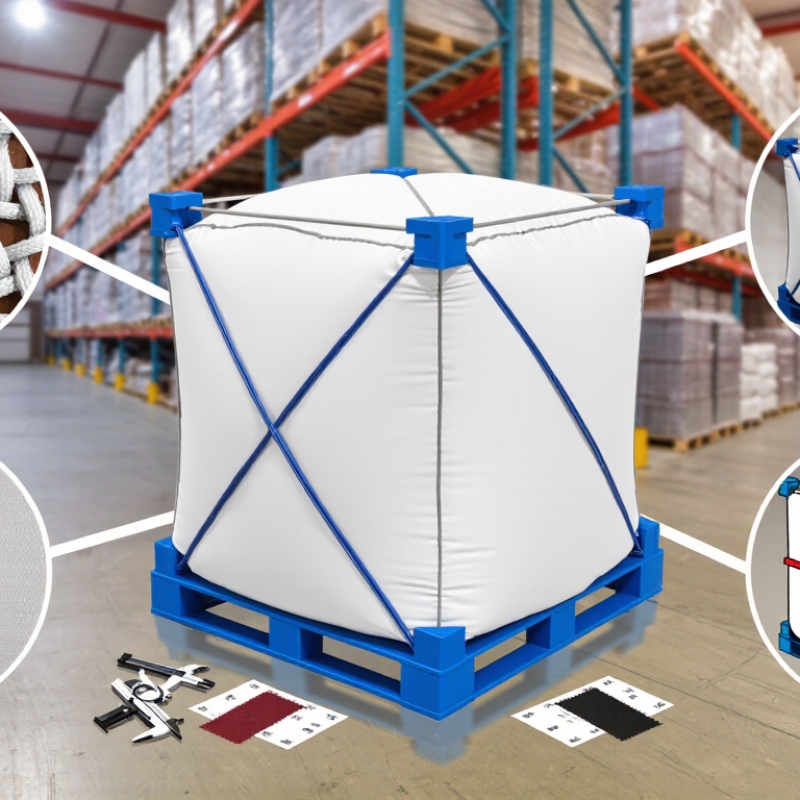
Define your baffle bag FIBC requirements before comparing ODM suppliers. Record the material, bulk density, filling method, discharge style, safety factor, dimensions, and liner needs. A 1,000-kilogram bag may require different fabric strength than a 500-kilogram bag. Product flow also matters. Powder can bridge inside a poorly designed liner.
ISO 21898 provides key requirements for flexible intermediate bulk containers handling non-dangerous goods. Ask suppliers to provide fabric GSM, seam construction, lifting-loop design, and test records. Their quality plan should include tensile testing, seam inspection, drop testing, and traceable batch samples. According to Grand View Research, the global FIBC market was valued at several billion U.S. dollars in recent years, with continued growth expected through the decade. That growth increases supplier choices, but it does not guarantee technical competence.
Clarify your ODM expectations in writing. Include drawings, tolerance limits, printing details, sample approval steps, and annual volume estimates. A 2024 flexible-packaging outlook from Smithers highlights continued demand for efficient, lightweight transport packaging. However, lighter fabric is not automatically better. It may reduce cost, yet weaken handling performance. I learned this the hard way: one overlooked corner clearance can distort a filled bag. Request a pilot batch, inspect ten random units, and compare the results with your specification. Supplier promises matter less than repeatable evidence.
When choosing an ODM baffle bag FIBC supplier, inspect manufacturing expertise before discussing colors or logos. Grand View Research estimated the global FIBC market at USD 6.54 billion in 2023. Its 2024 report projects a 6.7% compound annual growth rate through 2030. This growth creates more supplier choices, but not necessarily stronger process control. Ask for records covering polypropylene tape extrusion, circular weaving, lamination, and sewing. Request machine capacities, inspection procedures, and corrective-action logs. Photos are not evidence.
An ODM partner should convert your drawing into a repeatable specification. Check baffle geometry, corner reinforcement, top construction, bottom discharge, liner fit, and safe working load. ISO 21898:2004 outlines requirements for FIBCs used with non-dangerous goods. Require test records for lifting, compression, seam strength, and cyclic handling. Reports should show sample numbers, test dates, and acceptance limits. Independent verification is stronger than an internal certificate. Do not confuse customization with decoration.
Customization must match real filling and discharge conditions. Discuss antistatic options, dust control, food-contact documents, liner materials, outlet dimensions, and pallet handling. The Smithers report, The Future of Flexible Intermediate Bulk Containers to 2028, identifies food, chemical, and agricultural uses as important demand areas. These applications require different controls. Pilot quantities reveal more than sales presentations. Measure filling time, discharge residue, bag stability, and seam behavior. My checklist is not perfect. I once saw a polished prototype fail after minor dimension changes. That uncomfortable lesson still matters.
When selecting an ODM supplier, compare the required safe working load with the corresponding minimum design load. A commonly specified 5:1 safety factor means the bag’s minimum design load should be five times its safe working load. Suppliers should also provide verified test reports, construction drawings, and customization evidence for the selected specification.
Choosing an ODM baffle bag FIBC supplier requires more than comparing prices. Material quality should be verified through resin specifications, tensile-strength results, and batch traceability. Ask whether the fabric uses virgin polypropylene, approved recycled content, or a controlled blend. Request production samples before approving mass manufacturing. Test the fabric.
During factory audits, inspect seams, lifting loops, discharge spouts, and inner liners closely. Uneven stitching can become a serious handling weakness. ISO 21898 defines requirements for flexible intermediate bulk containers, including design, testing, and labeling. For static-sensitive applications, request electrostatic performance evidence under IEC 61340-4-4. A supplier’s certificate is useful, but it is not proof of every shipment’s quality.
Certification records should show the laboratory, test date, product model, and tested configuration. The 2023 ISO Survey recorded 1,265,216 ISO 9001 certificates worldwide, yet certification alone does not guarantee suitable FIBC performance. Check whether the certificate covers the actual factory and current production site. UNCTAD’s Review of Maritime Transport 2023 states that about 80% of global merchandise trade by volume moves by sea. Moisture barriers, UV resistance, and secure stacking therefore deserve practical testing. One detail is easy to miss: baffle dimensions can change filling behavior. Request load, drop, top-lift, and storage tests using your real product density. Some supplier documents look complete. They may still omit weaknesses found only during repeated handling.
Choosing an ODM baffle bag FIBC supplier requires more than comparing catalog photos. Start with a sample made from the proposed fabric, coating, baffles, seams, and lifting loops. Ask for the exact specification sheet. Check dimensions, fabric weight, safe working load, and stacking behavior after filling. A sample that looks neat when empty may deform under real pressure.
Testing needs evidence, not confident promises. Request seam-strength, drop, compression, and UV-resistance results when relevant. Confirm the laboratory, test method, date, and sample identification. Independent reports are more useful than a supplier’s internal spreadsheet. Still, testing every production batch may be impractical. Define critical checks and acceptable tolerances before ordering.
Pricing should show fabric, printing, liners, packaging, tooling, inspection, and delivery separately. The lowest quote can become expensive after revisions or rejected goods. Compare the full landed cost. Production lead time should include sample approval, raw-material preparation, cutting, sewing, testing, and final inspection. Ask how delays are reported and whether backup capacity exists. Get milestone dates in writing. Keep a small buffer.
A useful warning: my earlier assumption that faster sampling meant faster mass production proved unreliable. Sample rooms and production lines often operate differently. Review recent capacity records, not only promises. Request a pre-production sample, approve a signed specification, and inspect random finished bags before shipment. Good suppliers accept precise questions. That matters.
Choosing an ODM baffle bag FIBC supplier requires more than comparing prices. Review communication, quality control, and long-term support before signing an agreement. A reliable supplier should explain fabric specifications, baffle design, loading limits, and production schedules clearly. Ask for written answers, not vague promises.
Tip 1: Test communication with practical questions. Can the supplier provide a sample drawing within a reasonable time? Do they confirm dimensions, liner requirements, and printing details? During one project, a small change in filling height caused confusion because updates were not recorded. That mistake was avoidable. Use approved drawings, inspection points, and email records to reduce misunderstandings.
Tip 2: Examine quality control at the factory. Request batch inspection reports, seam-strength records, and fabric test results. Check whether workers inspect cutting, stitching, lifting loops, and discharge spouts. A sample may look excellent, while bulk production differs. Inspect random bags from several pallets. Measure dimensions, check stitching tension, and photograph defects. Imperfect samples can reveal weak processes, though inspection methods also need review.
Tip 3: Discuss support after delivery. Ask how complaints are investigated and how replacement decisions are made. Strong suppliers keep production records and trace material batches. They should help adjust bag design when your filling equipment changes. Response time matters. So does technical honesty. A supplier admitting a limitation may be safer than one promising everything. Keep reviewing performance through delivery accuracy, defect rates, and communication quality.
| No. | Evaluation Area | What to Review | Practical Benchmark | Verification Method | Suggested Weight |
|---|---|---|---|---|---|
| 1 | ODM Communication | Ability to convert drawings, samples, filling conditions, discharge requirements, and packaging details into a controlled specification. | Written clarification of technical questions within 1–2 business days; revision history and approved specification available before production. | Send the same technical brief to shortlisted suppliers and compare the completeness of their questions, drawings, and quotation assumptions. | 15% |
| 2 | FIBC Design Fit | Suitability of the baffle construction, fabric, seams, lifting loops, inlet, outlet, liner, and safety factor for the intended material and handling cycle. | Design is based on the required safe working load, filling density, pallet pattern, stacking height, discharge method, and reuse policy rather than on dimensions alone. | Review a signed technical drawing, construction description, material specification, and sample tested under the intended handling conditions. | 15% |
| 3 | Quality Management | Control of polypropylene tape, woven fabric, sewing, dimensions, printing, liners, traceability, and nonconforming products. | Documented incoming, in-process, and final inspections; batch identification; corrective-action records; and calibrated test equipment. | Request the quality manual, inspection plan, sample inspection records, calibration certificates, and a recent internal or third-party audit summary. | 20% |
| 4 | Testing and Compliance | Evidence that the finished bag meets the agreed load, safety, handling, and regulatory requirements for its application. | Test reports identify the exact construction, production batch, test method, load condition, and acceptance result; applicable standards are stated clearly. | Check reports for tensile strength, seam performance, top-lift or cyclic testing, dimensional checks, and any required UN or electrostatic testing. | 15% |
| 5 | Sampling and Approval | Willingness to produce a representative pre-production sample and correct design issues before mass manufacturing. | Sample approval covers dimensions, fabric weight, seam construction, inlet and outlet fit, liner fit, labels, lifting-loop arrangement, and packaging. | Use a signed golden sample, approved artwork, and a deviation form. Retain a reference sample for comparison during production inspection. | 10% |
| 6 | Production and Delivery Control | Capacity, production scheduling, raw-material availability, inspection release, packing method, and shipment documentation. | Supplier provides a clear production plan, agreed inspection point, lot traceability, packing specifications, and advance notice of schedule changes. | Review a sample production schedule, capacity statement, packing photos, inspection checklist, and recent delivery-performance records with sensitive details removed. | 10% |
| 7 | Long-Term Support | After-sales response, complaint handling, design changes, repeat-order consistency, documentation updates, and continuity of supply. | Named technical contact; documented root-cause and corrective-action process; controlled change notification; and agreed response times for quality claims. | Include service-level expectations in the purchase agreement and ask for an anonymized example of a completed corrective-action report. | 15% |
| Total Evaluation Weight | 100% | ||||