
China Top 4x6 Thermal Label Manufacturers for Buyers?

Choosing a 4x6 Thermal Label manufacturer in China involves more than comparing prices. Buyers need labels that feed smoothly through printers, resist peeling, and remain readable during shipping and storage. This guide introduces four manufacturers for consideration and explains how to assess their products and capabilities. It is a starting point, not a definitive ranking.

Small details matter. Compare label dimensions, roll core size, winding direction, material, and adhesive performance against your printer and application. Direct thermal labels suit many short-term shipping needs, while thermal transfer options may fit applications requiring longer-lasting print. Ask suppliers for clear specifications, samples, and written details about quality checks, customization, and lead times. Ask for proof.

A polished catalog cannot confirm how a label performs on your own printer. Test samples with your actual barcode, packaging surface, and storage conditions before placing a large order. That takes time. It can also reveal problems that a low unit price hides, such as inconsistent gaps or adhesive that lifts at the corners. Manufacturer information and product claims should be verified directly, since available evidence may vary between suppliers. The comparisons ahead focus on practical questions buyers can use to make a more informed shortlist and request a reliable quotation.
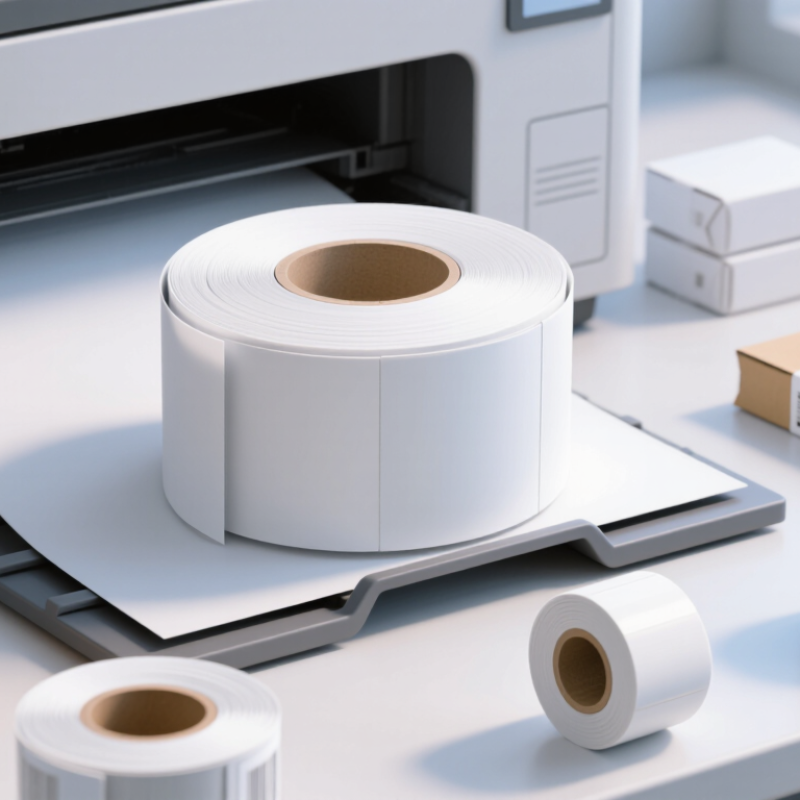
China Top 4x6 Thermal Label Manufacturers for Buyers?

Understanding 4×6 Thermal Labels and Their Common Applications

A 4×6 thermal label measures about 101.6 by 152.4 millimeters. Its wide layout fits shipping addresses, barcodes, and tracking details without cramped text. In direct thermal printing, a heated print head darkens a coated label surface. No ink cartridge is needed. Some workflows use thermal-transfer stock and ribbon for labels that need to withstand more handling. The printer, label coating, and settings must match. Small mismatches can cause pale bars or shifted text.

Parcel stations use 4×6 labels for outbound shipments and returns. A worker can scan a barcode on a carton without peeling back overlapping tape. Warehouses also use this format on storage bins and picking shelves, where larger text helps staff identify locations quickly. Retail and inventory teams may print item details or stock codes on the same size. Not every printer feeds labels equally well. Check the roll or fanfold dimensions, core size, and gap-sensing settings before ordering in bulk.

These labels suit indoor, high-volume workflows, but they are not automatically ideal for every surface or environment. Heat, sunlight, friction, and rough cardboard can affect print readability or adhesion. Test a few labels on the actual package first. That matters. I have seen teams focus on print speed and overlook whether cold cartons accept the adhesive. The result can be a clean label that still lifts at the corners. A small trial run is often more useful than assuming one label works everywhere.

Key Criteria for Evaluating Chinese Thermal Label Manufacturers

Choosing a Chinese 4x6 thermal-label manufacturer requires more than comparing quotes. Smithers’ The Future of Labels and Release Liners to 2028 valued the global label market at about US$49.9 billion in 2023 and projected US$67 billion by 2028. That growth makes supplier consistency especially important for buyers handling repeat orders.

Ask for samples made with the same face stock, adhesive, liner, and coating you intend to purchase. Print test barcodes at your actual printer settings, then check edge sharpness, smudging, and scan reliability. Confirm roll width, core diameter, winding direction, and label count; a small mismatch can jam an otherwise suitable printer. Request documented inspection methods, batch traceability, production capacity, and realistic lead times. One point is easy to overlook: a sample may perform well, while later batches vary. I would verify repeatability with a second production lot before committing to volume.

Tips: Test labels on the real packaging surface, including cold or dusty conditions where relevant. Ask for written specifications and a retained reference sample. Small details matter. A low unit price is less useful if adhesive lift or inconsistent cuts create rework.

China Top 4x6 Thermal Label Manufacturers for Buyers? - Key Criteria for Evaluating Chinese Thermal Label Manufacturers
Evaluation Criterion What Buyers Should Compare Evidence to Request Practical Validation
Label dimensions Confirm the finished label is 4 × 6 inches (101.6 × 152.4 mm), and clarify any permitted size tolerance. Technical drawing or product specification showing label size, gap, liner width, and winding direction. Measure samples and print a test layout using the intended printer settings.
Printing method Determine whether the stock is direct thermal or thermal transfer. Direct thermal printing uses heat-sensitive stock; thermal transfer printing uses a ribbon. Face-stock description, printing instructions, and any ribbon recommendations for thermal-transfer use. Print barcodes and text on the sample using the same printer, ribbon (if applicable), and speed planned for production.
Face stock and image durability Compare paper or synthetic face materials against expected exposure to light, heat, moisture, abrasion, and handling. Material specification, storage guidance, and test results relevant to the intended application. Assess print clarity and legibility after representative storage and handling; requirements depend on the use case.
Adhesive performance Check whether the adhesive suits the application surface, temperature range, and expected label removal or permanence. Adhesive type and available technical data for tack, peel, service temperature, and recommended surfaces. Apply samples to the actual packaging or surface and evaluate adhesion under expected conditions.
Printer and roll compatibility Verify core diameter, roll outside diameter, label gap, perforation (if any), and printer feed requirements. Compatibility varies by printer model. Roll configuration drawing and confirmation of the buyer’s printer model and media specifications. Run a full roll through the target printer and check feeding, calibration, and label presentation.
Barcode readability Compare print contrast, edge definition, and barcode performance using the buyer’s artwork and printing setup. Sample labels and, where required, barcode verification results from an appropriate verifier. Scan or verify printed barcodes after printing; acceptance criteria should match the buyer’s application.
Quality control and traceability Review inspection procedures for dimensions, print surface, adhesive, roll winding, and packaging consistency. Quality-control plan, sample inspection records, lot identification method, and details of any applicable management-system certification. Agree on written specifications and acceptance criteria before approving a production order.
Packaging and shipment protection Check whether rolls are protected from dust, moisture, crushing, and edge damage during storage and transit. Packaging details, carton configuration, storage recommendations, and shipping documentation. Inspect delivered cartons and rolls, then test labels from both outer and inner positions in a roll.
Customization and order terms Compare available materials, roll formats, packing options, production lead time, minimum order quantity, and sample policy. A written quotation specifying the exact construction, quantity, packaging, lead time, and delivery terms. Compare quotations against the same specification and confirm all terms before placing an order.

Profiles of Leading 4×6 Thermal Label Manufacturers in China

China Top 4x6 Thermal Label Manufacturers for Buyers?

Profiles of Leading 4×6 Thermal Label Manufacturers in China

China’s 4×6 thermal label suppliers generally serve shipping, warehousing, and retail operations. Their product profiles differ in coating, adhesive, paper weight, and production controls. Some focus on direct thermal labels for short-term shipping; others offer coated options designed to resist moisture, friction, or fading. Grand View Research estimated the global label market at USD 47.74 billion in 2023, with projected growth of 5.4% annually from 2024 to 2030. This wider market figure is not specific to thermal labels, but it signals continuing demand for dependable label supply.

A capable manufacturer should explain its material choices and provide measurable quality checks. Ask for samples, roll specifications, adhesive performance data, and test results from printers similar to yours. Inspect whether label edges feed cleanly and whether barcodes remain readable after handling. Production capacity matters, but it does not prove consistent coating or winding quality. One detail buyers sometimes overlook: a label that sticks well to cardboard may perform poorly on cold or dusty packaging.

Tips: Test samples on your actual cartons and printer. Check roll direction, core size, and storage guidance. Request batch records, too. Small differences matter. A supplier’s claims are useful, but hands-on testing may reveal gaps.

Comparing Label Materials, Printing Quality, and Customization Options

For 4 × 6-inch shipping labels, material choice affects more than appearance. Direct thermal paper suits short-term shipments, but heat and sunlight can fade its print. Thermal-transfer paper lasts longer when paired with a suitable ribbon. For damp cartons or frequent handling, test a synthetic face stock and a stronger adhesive. It may cost more, and it is not automatically the best choice.

Print quality depends on the printer, settings, and label surface working together. At 203 dpi, small text and dense barcodes can look rough; check actual scans, not just a screen preview. Grand View Research estimated the global labels market at USD 48.8 billion in 2023, with projected 4.8% annual growth from 2024 to 2030. That broad market figure signals demand, but it cannot tell buyers which 4 × 6 label will perform best. Compare coating, adhesive, core size, roll direction, and custom layouts using samples from real cartons. One detail is easy to overlook: custom colors may reduce contrast.

Tips: Print a test batch. Scan it under warehouse lighting. Rub the labels with a dry cloth, then check adhesion after a day. Keep one sample; you may need to rethink the stock.

China’s 4×6 Thermal Label Materials: A Buyer’s Comparison

Illustrative comparison of common material characteristics. Ratings are qualitative (1 = lower, 5 = higher), not supplier-specific test results. Actual print quality and durability depend on the printer, ribbon, adhesive, and use conditions.

How Buyers Can Verify Suppliers and Choose the Right Manufacturer

China Top 4x6 Thermal Label Manufacturers for Buyers?

How Buyers Can Verify Suppliers and Choose the Right Manufacturer

Choosing a 4x6 thermal label supplier in China takes more than comparing quoted prices. Ask for a current specification sheet covering label dimensions, core size, roll direction, adhesive type, and face-stock material. Request samples from the production line, not only a polished sales sample. Print the same shipping layout on each roll. Check barcode edges, feed alignment, adhesive grip on corrugated cartons, and smudging after handling. Small details matter.

Tips: Confirm the quoted price includes packaging, sample freight, and the agreed roll count. Ask how defects are recorded and what inspection happens before dispatch. Keep written answers. They make later comparisons clearer.

Before placing a large order, verify the supplier’s business details and production capabilities through a video walk-through or an independent factory audit. Compare the written specifications with your sample results. Ask about lead time, batch consistency, and how changes are approved. A clear process is more useful than a broad quality promise. No checklist catches everything; even careful buyers may need to revise their first choice after testing labels on their own printers.

Are you ready? Let’s make your brand fresh and amazing.

Get Started