
China Best Shipping Companies for Global Maritime Trade?

China’s shipping companies connect factories, ports, and customers across a vast maritime network. Their role matters because more than 80% of world trade by volume moves by sea, according to UNCTAD’s Review of Maritime Transport 2024. The report also records a 2.4% rise in maritime trade volumes in 2023, after a contraction the year before. The stakes are real.

As IMO Secretary-General Kitack Lim has said, “Shipping is the backbone of global trade and the global economy.” That backbone depends on more than vessel size. Sailing frequency, port connections, cargo tracking, and disruption response all shape a shipper’s experience. A container’s route can look simple on a map, yet a missed connection may add days at the terminal.

This overview examines China’s leading shipping companies for global maritime trade, including COSCO Shipping, China Merchants, and OOCL. It considers their international networks, service range, and practical strengths for businesses moving cargo across regions. The comparison is not a perfect ranking: performance can vary by route, season, and cargo needs. That limitation deserves attention. Readers should confirm current schedules and service terms directly with providers before making a decision.
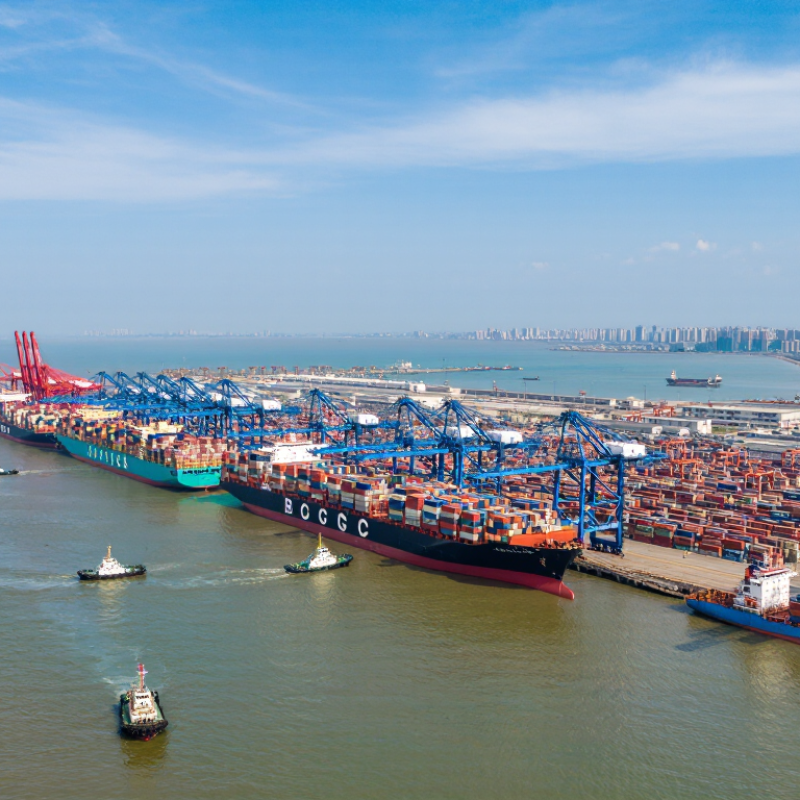
China Best Shipping Companies for Global Maritime Trade?

China’s Role in Global Maritime Trade

China’s role in global maritime trade extends beyond moving finished goods overseas. Its coastal ports connect manufacturing regions with suppliers, customers, and inland transport networks. At a container terminal, cranes transfer steel boxes between ships, trucks, and rail cars. Each handoff depends on accurate schedules and clear cargo information. Small delays matter.

This scale supports trade in machinery, electronics, household goods, and raw materials. China is also a major shipbuilding center, contributing vessels that serve routes around the world. The maritime system includes ports, shipyards, freight services, and customs processes; no single part explains its reach. For businesses, reliable transit times can matter as much as a low quoted rate. A missed connection may leave containers waiting for the next sailing.

The picture is not perfectly tidy. High cargo volumes can strain terminals, while longer routes and port congestion make schedules less predictable. Shipping also faces pressure to reduce fuel use and emissions, but progress varies across vessel types and routes. Trade planners should compare total transit time, port access, and contingency options, rather than judging a route by distance alone. Even careful forecasts can be wrong. That uncertainty deserves more attention.

How to Evaluate China’s Leading Shipping Companies

When evaluating China’s leading shipping companies, start with the cargo route, not a headline ranking. A carrier may serve major coastal ports well but offer weaker inland pickup or transshipment connections. Check whether its published sailing schedule matches recent departures on your lane. Ask for actual on-time performance records, not only a polished service promise. Details matter.

Compare the full service chain: booking response, container availability, terminal handling, tracking updates, and support when plans change. Request a sample quotation that separates ocean freight from surcharges, documentation, and destination fees. Confirm how quickly the operations team reports delays and who owns the next action. For time-sensitive cargo, review schedule frequency and routing alternatives. A low quote can still cost more if missed cutoffs create storage or production delays.

Use references from shippers with similar cargo, volumes, and destination markets, and verify claims through recent shipment records. Ask about claims procedures, cargo-care controls, digital data access, and escalation contacts. Site visits or video calls can reveal whether quoted processes match daily operations. I would not treat one delayed shipment as proof of poor service; port congestion can distort the picture. But repeated gaps deserve attention. Comparisons are imperfect, and I may overvalue clear communication because it makes disruptions easier to manage. Weigh it alongside reliability, coverage, and transparent costs before choosing a partner.

Major Chinese Shipping Companies and Their Services

China’s major shipping groups cover more than ocean transport. Their services commonly include container liner routes, dry-bulk and tanker shipping, vessel leasing, freight forwarding, and port logistics. Some also connect seaports with rail and river transport, helping cargo move inland. Service depth varies by carrier and route.

The scale is substantial. UNCTAD’s Review of Maritime Transport 2024 places China among the leading ship-owning economies, with roughly 11% of global deadweight tonnage under Chinese beneficial ownership. China’s Ministry of Transport reported 310.3 million TEU in port container throughput in 2023. These figures show capacity and port activity, but they do not guarantee identical service quality on every trade lane.

For a shipper, the practical differences are often visible in booking access, sailing frequency, cargo tracking, and the handling of delays. A container exporter may value dependable weekly departures; a bulk-cargo buyer may need vessel availability and careful loading coordination. Schedules slip. That reality deserves attention, because published coverage maps can look stronger than actual options during peak periods. Comparing route-specific transit times, equipment availability, and local support gives a clearer view than comparing fleet size alone.

Global Routes, Fleet Capabilities, and Logistics Networks

China’s role in global maritime trade depends on more than the number of ships it can deploy. UNCTAD’s Review of Maritime Transport 2024 reports that seaborne trade grew by 2.4% in 2023, carrying over 80% of global merchandise trade by volume. For shippers, route coverage matters: a service connecting Chinese coastal ports with regional hubs and major overseas markets can reduce transfers and shorten inland delivery legs. But a published sailing schedule is not a promise. Schedules still slip.

Fleet capability also means matching vessel size to cargo, port depth, and service frequency. Large container ships can move more boxes per voyage, while smaller vessels may serve secondary ports with fewer direct connections. UNCTAD reported that the global fleet grew by 3.4% in 2023, yet added capacity alone does not solve congestion or missed connections. The World Bank and S&P Global Market Intelligence’s Container Port Performance Index 2023 highlights how port efficiency varies across terminals. That variation can affect a shipment as much as distance at sea.

A useful logistics network links ocean services with trucking, rail, warehousing, and shipment tracking. Ask how often a route sails, which ports handle transshipment, and what backup options exist when a vessel arrives late. These details are less glamorous than fleet size. They are often more useful. Public reports provide a strong starting point, but route-level performance should be checked against recent booking and arrival records.

Factors to Consider When Choosing a Chinese Shipping Company

Choosing a Chinese shipping company requires more than comparing freight quotes. Route fit matters: confirm the actual vessel schedule, transshipment ports, cargo cut-off time, and inland connections. A direct sailing may cost more but reduce handling and uncertainty. Ask how delays are communicated, and who resolves missed connections. Small operational details matter.

The market is large and changeable. UNCTAD’s Review of Maritime Transport 2024 reported that global maritime trade grew 2.4% in 2023. That growth can strain capacity on busy routes. Check whether the carrier can provide suitable container types, space during peak weeks, and clear booking terms. The World Bank’s Logistics Performance Index 2023 ranked China 19th overall; this reflects national logistics performance, not any individual carrier. Useful context, not a guarantee.

Compare tracking quality, claims procedures, insurance options, and the responsiveness of local offices. Ask for sample tracking updates and written timelines for resolving damaged-cargo claims. A low quote can hide extra fees or limited support. I would not judge reliability from one smooth shipment; seasonal congestion can change the picture. Even careful checks cannot remove every delay.

Choosing a Chinese Shipping Company: China’s Logistics Performance

Use these country-level logistics indicators as context when assessing providers. Compare each company’s service coverage, transit-time reliability, tracking capabilities, customs support, and shipment-specific terms; these national scores are not ratings of individual shipping companies.

Source: World Bank, Logistics Performance Index 2023. Scores are on a 1–5 scale.

Are you ready? Let’s make your brand fresh and amazing.

Get Started