
What Is the Best Thermal Labelling Machine from China?

Choosing the best Thermal Labelling machine from China requires more than comparing catalogue prices. The right decision depends on print clarity, label speed, adhesive compatibility, software control, and after-sales support. In a busy warehouse, a machine must produce sharp barcodes while operators change rolls quickly. Small delays become expensive during peak orders.

Grand View Research reported that the global thermal printing market reached approximately US$4.57 billion in 2023. Its report also forecasts a 5.8% compound annual growth rate from 2024 to 2030. Smithers’ industry research highlights continuing demand for variable-data printing, logistics labels, retail identification, and packaging traceability. These figures show strong market momentum, but they do not identify one perfect Chinese machine. Application details still matter more.

Mike Fairley, a respected labels industry analyst, describes the label as “the silent salesman.” That idea applies to Thermal Labelling equipment. A faded barcode can stop a carton at scanning. A poor cutter can leave uneven edges. An unstable printhead can turn a low-cost purchase into a maintenance problem. The best Chinese supplier should provide sample testing, printhead specifications, realistic output speeds, and documented compatibility with common label software. Ask about spare parts, training, warranty response, and factory quality controls. Check the machine with your own labels, ribbon, data format, and production rhythm.

Price matters. It should not dominate.

A careful comparison may reveal an uncomfortable truth: the cheapest machine is rarely the lowest-cost machine. This guide examines Chinese Thermal Labelling solutions through measurable performance, supplier reliability, and practical ownership experience. The final choice should fit the workflow, not merely the quotation.
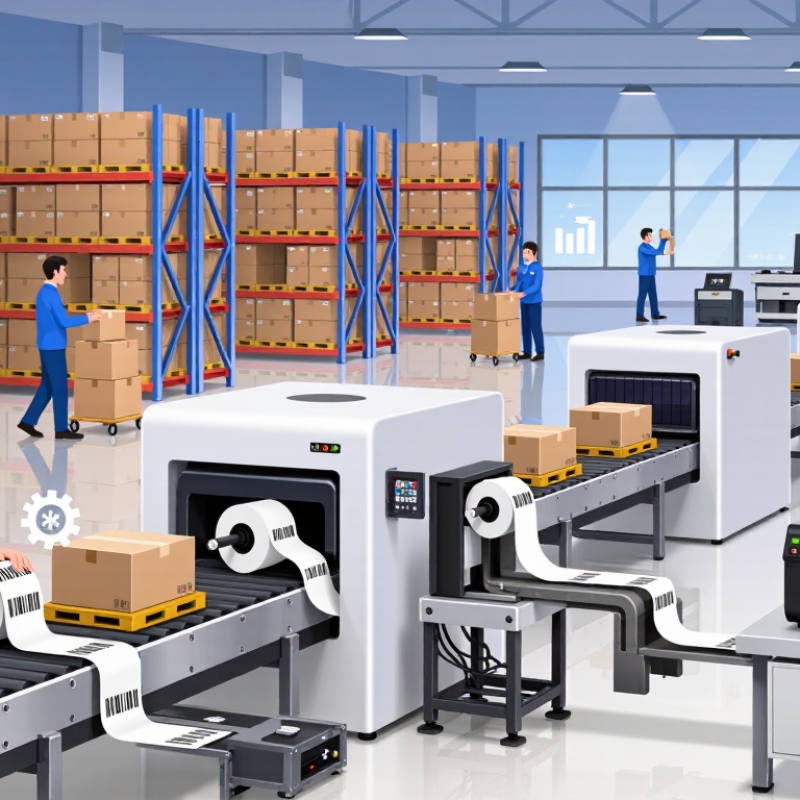
What Is the Best Thermal Labelling Machine from China?

What Is a Thermal Labelling Machine?

A thermal labelling machine prints text, numbers, barcodes, and images onto adhesive labels using controlled heat. It does not require liquid ink in the usual printing process. Instead, a thermal printhead transfers an image directly onto heat-sensitive material or through a heated ribbon.

There are two main methods. Direct thermal printing uses heat-sensitive labels, which darken under the printhead. It suits short-term uses such as shipping, weighing, and stock identification. These labels can fade when exposed to sunlight, friction, or high temperatures.

Thermal transfer printing uses a ribbon, producing labels that usually resist moisture, abrasion, and temperature changes better. It fits equipment tags, warehouse records, and long-storage applications.

A reliable machine from China should offer stable feeding, clear barcode resolution, adjustable print speed, and compatible label sizes. Ask for printhead specifications and sample testing before purchase. Small details matter. A loose label sensor can stop production.

In my experience, users often choose by price alone. That can be a costly mistake. A low-cost machine may print well during a short demonstration but struggle during continuous operation. Check software support, replacement parts, operator training, and maintenance access. The best thermal labelling machine depends on label material, daily volume, image durability, and working conditions. No single model fits every facility.

How Chinese Thermal Labelling Machines Work

What Is the Best Thermal Labelling Machine from China?

How Chinese Thermal Labelling Machines Work

A thermal labelling machine converts digital information into printed labels through heat and controlled material movement. The process begins when software sends text, barcodes, or graphics to the printer controller. A sensor detects the label gap or black mark. Rollers then move the label stock under a heated printhead.

In direct thermal printing, heat-sensitive paper turns dark when heated. This method needs no ink ribbon and suits short-term labels. Thermal transfer printing uses a heated ribbon to place ink onto the label surface. It usually provides better resistance to moisture, friction, and temperature changes. This distinction matters.

For buyers comparing Chinese machines, printhead control and sensor accuracy deserve close attention. A strong machine should keep labels aligned during continuous runs. It should also support common label sizes and offer simple temperature adjustments. I would test several materials before choosing one. Watch the first labels closely. They may look sharp, yet small barcode gaps can appear later.

Humidity, dust, and uneven label rolls can affect performance. No machine is perfect. Some lower-cost units may produce slight darkness changes across a long batch. That weakness requires honest testing, not attractive specifications alone. Operators should record print speed, error rates, and cleaning intervals. Good maintenance remains essential. A clean printhead and correctly adjusted pressure often improve results more than higher speed.

What Is the Best Thermal Labelling Machine from China? - How Chinese Thermal Labelling Machines Work
Evaluation Dimension Direct Thermal Configuration Thermal Transfer Configuration Why It Matters When Selecting a Machine
Printing Principle Uses heat-sensitive label stock. The printhead activates the coating directly, so no ribbon is required. Uses a heated printhead to transfer ink from a ribbon onto paper, synthetic, or coated label material. Direct thermal is simpler and usually has lower operating complexity; thermal transfer provides broader material compatibility and greater durability.
Typical Applications Shipping labels, receipts, short-term warehouse labels, delivery labels, and temporary identification labels. Product labels, barcode labels, shelf labels, asset tags, laboratory labels, and labels exposed to handling or storage conditions. The best configuration depends on label lifetime, exposure to heat or light, abrasion, chemicals, and moisture.
Common Print Resolution 203 dpi for general labels; 300 dpi for smaller text, compact barcodes, and detailed graphics. 203 dpi for standard labels; 300 dpi or 600 dpi for small fonts, high-density barcodes, and fine graphics. Higher resolution improves small-detail clarity but can increase purchase cost and reduce maximum print speed.
Typical Print Speed Approximately 100–300 mm per second on compact and mid-range machines. Approximately 100–300 mm per second on compact and mid-range machines; industrial units may operate faster. Speed should be evaluated together with label length, print quality, media type, and the required daily volume.
Typical Maximum Print Width Approximately 108 mm on many standard desktop and mid-range formats. Approximately 108 mm on many standard desktop and mid-range formats, with wider industrial formats also available. The machine must support the widest label and the largest printable area required by the application.
Label Material Requires compatible heat-sensitive paper or synthetic direct-thermal stock. Supports paper, polypropylene, polyester, and other coated stocks when matched with a suitable ribbon. Thermal transfer is generally the more flexible choice for durable or specialty labels.
Resistance to Heat, Light, and Chemicals Print can fade or darken when exposed to prolonged heat, ultraviolet light, plasticizers, or chemicals, depending on the stock. Resistance can be significantly improved by selecting the correct ribbon and synthetic label material. For outdoor, chemical, freezer, or long-term identification, thermal transfer is usually more suitable.
Barcode Capability Suitable for common one-dimensional and two-dimensional barcodes when the printhead is correctly calibrated. Suitable for common one-dimensional and two-dimensional barcodes, including small or high-density symbols when adequate resolution is selected. Barcode quality depends on resolution, media quality, darkness, print speed, and correct software settings—not only on the machine.
Label Roll Capacity Often designed for smaller desktop rolls; capacity varies with roll diameter, core size, and machine enclosure. Available in desktop, semi-industrial, and industrial formats with larger roll capacities. Larger rolls reduce roll-change frequency and are useful for continuous warehouse or production-line work.
Ribbon Requirement Not required. Required for most thermal-transfer applications; ribbon type and width must match the label stock and printhead. Eliminating ribbon reduces consumables, while using a ribbon can provide better protection against abrasion and environmental exposure.
Connectivity Common interfaces include USB; Ethernet, serial, Wi-Fi, and Bluetooth may be available depending on the configuration. Common interfaces include USB and Ethernet; serial, Wi-Fi, and Bluetooth may also be available depending on the configuration. Ethernet is useful for shared office or warehouse deployment, while wireless connections support mobile or distributed workflows.
Compatible Print Languages Usually supports one or more printer-command languages used for barcodes, text, graphics, and label templates. Usually supports one or more printer-command languages used for barcodes, text, graphics, and label templates. Compatibility with existing warehouse, shipping, ERP, or inventory software is more important than the interface alone.
Operating Temperature Many standard units are intended for normal indoor office or warehouse conditions, commonly around 5–40°C. Many standard units are intended for normal indoor office or warehouse conditions, commonly around 5–40°C; specialized models may support wider ranges. Temperature ratings apply to the machine, while the label material and adhesive may have different storage and application limits.
Maintenance Requirements Regularly clean the printhead and platen roller, remove adhesive residue, and keep the media path free of dust. Perform the same cleaning tasks and additionally inspect ribbon alignment, tension, and wrinkle formation. Routine cleaning helps prevent uneven darkness, missing dots, barcode defects, media jams, and premature printhead wear.
Best Choice for High-Volume Work Choose a durable unit with a high-duty-cycle printhead, stable media handling, and sufficient roll capacity. Choose an industrial-style unit with robust media handling, reliable ribbon control, and easy access for maintenance. For demanding production environments, duty cycle, serviceability, spare-part availability, and integration support should be assessed alongside speed.
Recommended Selection Priority Label lifespan, media cost, required resolution, print volume, connectivity, and software compatibility. Label durability, ribbon and media compatibility, required resolution, print volume, connectivity, and software compatibility. The best machine is the one that matches the label material, expected lifetime, workload, print quality, and operating environment.

Key Criteria for Comparing Chinese Models

Choosing the best thermal labelling machine from China requires more than comparing catalog prices. The 2024 Smithers report on digital print for packaging identifies short runs, variable data, and faster production changes as major market drivers. These trends make print quality and changeover time practical comparison points.

Check resolution first. A 203 dpi machine may suit shipping labels, while 300 dpi handles small fonts, barcodes, and dense symbols more reliably. Print speed matters, but only when the machine maintains registration at full load. Request a sample using your actual 100 mm label, adhesive, and ribbon. A clean showroom sample proves little.

Look closely at media compatibility, duty cycle, and thermal-head replacement cost. Some Chinese models support multiple label widths, but their sensors may need frequent calibration. That interrupts production. Energy use also deserves attention. The International Energy Agency reports that industrial efficiency improvements can reduce operating costs, even when equipment prices rise. Compare total cost over three years, including spare parts, software, training, and technical response time.

Connectivity should include Ethernet, USB, and common warehouse software protocols. Ask for documented error codes and remote diagnostic procedures. Certification records must match your destination market, not merely a supplier’s online statement. I would also test 48 hours continuously. It may expose heat buildup or drifting print density. One weakness remains easy to miss: a low purchase price can hide slow support and expensive downtime.

Major Types of Thermal Labelling Machines from China

What Is the Best Thermal Labelling Machine from China?

Major Types of Thermal Labelling Machines from China

Chinese thermal labelling machines generally fall into four practical categories. Desktop models suit small warehouses, offices, and online sellers. They use little space and handle short print runs efficiently. However, their slower output may frustrate busy packing teams.

Semi-automatic machines combine printing with manual product placement. They work well for jars, bottles, bags, and cartons with consistent shapes. Operators can adjust label gaps and application speed quickly. This flexibility is useful when product sizes change often. Fully automatic systems connect with conveyors and sensors. They print and apply labels continuously, making them suitable for factories with higher production volumes.

Print-and-apply machines are designed for cartons, pallets, and shipping labels. They can place labels on moving surfaces with controlled pressure. Direct thermal models are convenient for temporary labels, such as receipts or dispatch stickers. Thermal transfer models use a ribbon and usually provide stronger resistance against heat, moisture, and abrasion. The correct choice depends on the label material and storage conditions.

In supplier evaluations, I recommend testing real labels before ordering. Check print clarity, sensor accuracy, spare-part access, and operator training. Ask for documented safety compliance and stable software communication. No machine is perfect. A model that looks fast during a demonstration may struggle with dusty labels or uneven packages. That weakness deserves attention before purchase.

What Is the Best Thermal Labelling Machine from China?

Major types of thermal labelling machines from China compared by indicative rated print speed

Industrial thermal transfer machines generally provide the highest rated speeds and are suitable for continuous production, while desktop direct thermal models are more compact and economical for lower-volume shipping or retail labels. Print-and-apply systems combine printing with automatic label placement. Actual performance depends on label size, print resolution, material, darkness settings, and application requirements.

How to Select and Source the Right Machine

What Is the Best Thermal Labelling Machine from China?

Selecting the right thermal labelling machine starts with your actual production conditions. Define label width, roll diameter, printing speed, and daily workload. A machine for small cartons may fail on heavy containers. Check whether direct thermal or thermal transfer printing suits your labels. Thermal transfer usually offers stronger durability for storage and transport. Ask the supplier for sample labels using your material, adhesive, and artwork. Inspect barcode clarity, edge alignment, winding tension, and print consistency. Small defects become expensive during long production runs.

Tips: Request a complete specification sheet, wiring diagram, operation video, and maintenance schedule. Confirm voltage, air requirements, software compatibility, and spare-part availability. Ask how quickly technical support responds. A low quotation may exclude sensors, tooling, installation, or operator training. Compare the complete ownership cost, not only the machine price.

Reliable sourcing also requires supplier verification. Review factory experience, quality controls, export records, and inspection procedures. Request a live video test with your product, not a generic demonstration. Confirm acceptance criteria before placing an order. These should include speed, label position tolerance, rejection handling, and continuous operation time. I have seen attractive specifications fail when a machine meets only ideal conditions. That is a useful warning. Leave room for adjustment, because real packaging lines are rarely perfect. Use a pre-shipment inspection and keep approved samples for future comparison.

Are you ready? Let’s make your brand fresh and amazing.

Get Started